Stone Calculator for Drain Rock, Bedding and Drive Courses
Enter your project dimensions
The order this page most often has to correct is a trench full of the wrong rock. Crushed material with fines in it gets bought for a French drain because it is the stone everybody knows, and then the first real storm arrives, the fines seal the voids and the trench holds water instead of moving it. The reverse mistake costs just as much: clean washed rock under a drive keeps shifting because nothing binds it. The stone calculator below converts your dimensions either way, so the useful work is in choosing which rock goes in the box before you read the tonnage.
What a trench estimate cannot see under the shovel
An estimate is arithmetic on the shape you describe. What it does not know is that a trench cut through clay comes out wider at the top than the string line said, that a sidewall in sandy coastal or desert ground sloughs in as soon as it is open, and that the last two feet at the outfall always end up deeper than planned. On hillside and foothill lots, where shallow soil sits over rock, the cut is often shallower than intended instead, and the run gets longer to compensate.
Two more things sit outside the numbers. Non-woven fabric belongs around the stone in any active drainage route, wrapped rather than laid flat underneath, and the pipe inside a trench takes up a little of the volume you just calculated. For anything under a 6-inch pipe, that displacement is roughly a wheelbarrow load across a domestic run, which is not worth deducting. Calculate the trench, not the space around the pipe, and treat the result as a good estimate rather than a cut list.
Yards for the hole, tons on the ticket
Volume comes from the shape: square feet, multiplied by the depth in inches and divided by 12 for cubic feet, then divided by 27 for cubic yards. Weight is what turns that into an order, and it varies by grade more than most people expect.
Washed and crushed rock in the common sizes, which covers 3/4 inch drain rock, the 3/4 inch and 3/8 inch crushed rock and the small chips, is published on this site at about 2,800 lb per cubic yard, or 1.40 tons a yard. The larger and heavier products run higher: #4 stone and railroad ballast at about 2,900 lb, 1.45 tons a yard, and armor stone at about 3,100 lb, 1.55 tons. Graded material with fines, sold here as Class 2 base, sits at about 3,000 lb, or 1.50 tons. At 1.40 tons a yard, a ton of clean rock covers roughly 116 square feet at 2 inches, 77 at 3 inches and 58 at 4 inches.
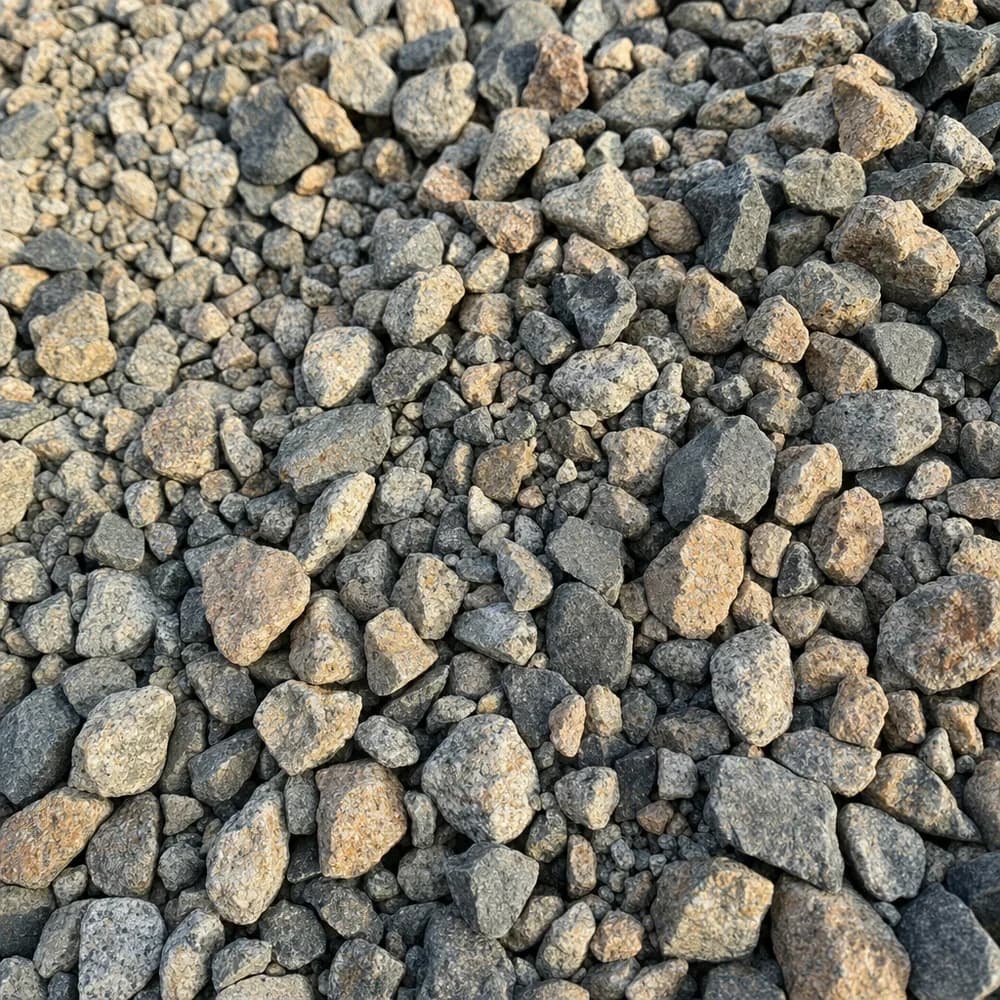
Decomposed granite is the path and patio material on this list rather than a drainage grade. It is the local name for the screenings product and carries the same published weight, about 2,900 lb per cubic yard or 1.45 tons, so a DG layer converts like screenings rather than like clean rock.
A trench run, a ring and five pieces in the stone calculator
Rectangle takes length and width in feet, which for a trench means the run along the line and the trench width converted to feet: a 14-inch trench is 1.167 feet wide, not 14. Circle takes a diameter, the fastest way to enter a tree ring, a well surround or a fire pit base. Multiple areas totals up to five pieces, though the single depth field applies to all of them, so a 12-inch trench and a 4-inch bedding run are separate calculations.
Depth is entered in inches and accepts anything from 0.25 to 24, which covers a drainage trench two feet deep and a 2-inch surface top-up at the other end. Select the material so the weight matches the grade, decide whether to leave the 5 percent option for compaction and spillage ticked, and the result comes back as cubic yards, tons and cubic feet at once, with a button that emails the same figures to you.
Clean rock or fines, and what the grade numbers mean here
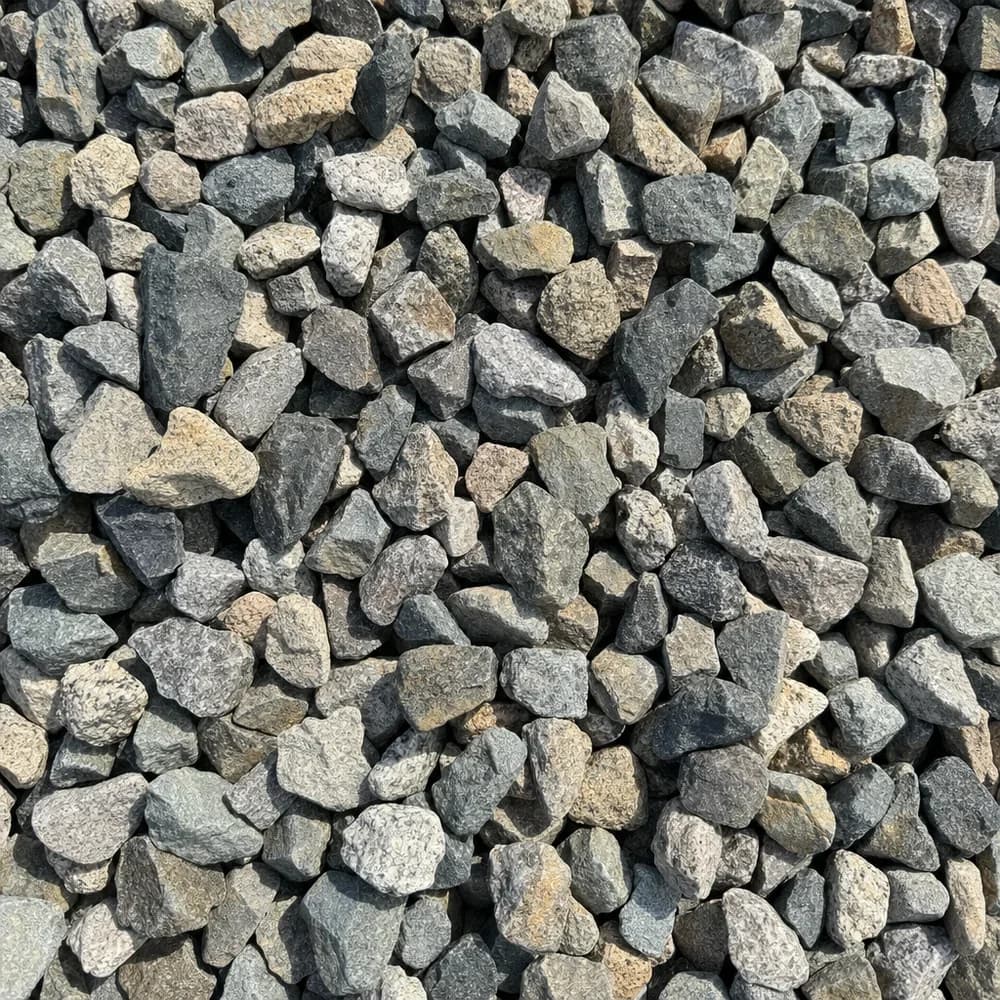
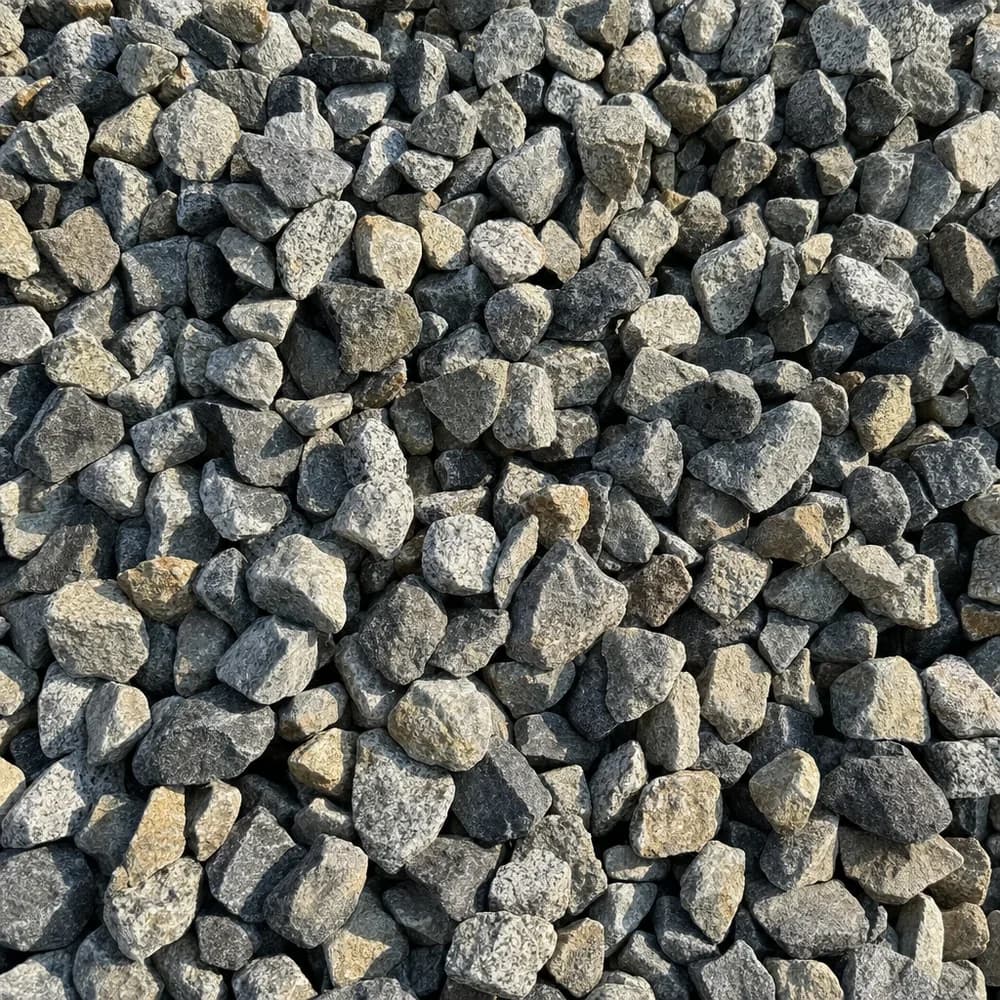
The grade number is a size band, and the lower the number the larger the piece. #4 runs 3/4 to 1-1/2 inches for heavy drainage, trench bottoms and construction entrances. The 3/4 inch drain rock familiar to every Californian drainage job is #57, at 3/16 to 1 inch. #67 is a little smaller at 1/4 to 3/4 inch and is the usual pipe bedding. #8 is about 3/32 to 3/8 inch and #89 runs from 3/8 inch down into fines, both of which suit joints and finish courses. Railroad ballast is angular 1 to 2.5 inch stone for hard standing and equipment pads.
The division that matters more than any number is whether the rock has been washed clean or graded with fines. Clean rock keeps its voids, so water moves through it: that is drainage stone, trench stone and the layer behind a retaining wall. Rock with fines locks up under a roller into a bound layer: that is base. If a plan or a permit names a gradation, follow it as written, and if the same line item appears under two names, treat 3/4 clean and #57 as the same material described by different habits.
A drain behind a hillside wall, a bedding run and a drive top-up
Three illustrations, none of them a real project.
A 45-foot French drain behind a retaining wall. Fourteen inches wide is 1.167 feet, so 45 x 1.167 = 52.5 square feet. At 18 inches deep: 52.5 x 18 / 12 = 78.75 cubic feet, which is 2.92 cubic yards, or 4.08 tons of 3/4 inch drain rock at 1.40 tons a yard.
A 60-foot pipe bedding run. Two feet wide is 120 square feet. At 4 inches: 120 x 4 / 12 = 40 cubic feet, which is 1.48 cubic yards and 2.07 tons of the smaller washed grade.
A surface course on an existing drive. Sixty by 10 feet is 600 square feet. At 2 inches: 600 x 2 / 12 = 100 cubic feet, which is 3.70 cubic yards and 5.19 tons.
Rounding a trench order up, and where the spare goes
Clean angular rock settles 5 to 10 percent once traffic works over it, and a graded mix with fines compacts considerably more by design. The 5 percent option covers the first case reasonably; for an engineered base, work from the specified compacted depth instead and let the specification decide the margin.
The practical reason to round a trench order up rather than down is that stone is easy to place while the trench is open and awkward afterwards. Spare drain rock goes to the outfall, into the next downspout run, or under the splash zone where roof water lands, and none of that is wasted before the wet season.
Ordering by grade number, and where gravel takes over
This page covers the graded, sized products: 3/4" Drain Rock and Drain Rock for trenches and wall backfill, 3/4" Crushed Stone and 3/8" Crushed Stone for bedding and finish courses, and Railroad Ballast where loads are heavy and the ground is wet.
Where the material is chosen by what it does rather than by a number, the loose surfacing tool is the better starting point, because driveway and walkway gravel are sold by purpose rather than gradation. Compacted base under pavers or a drive belongs with the base rock tool. Delivery is arranged at checkout by ZIP code, and the driver needs firm, clear ground to tip on.
Common questions
I have a tonnage. Which product page do I take it to?
Match the grade rather than the description. Trench and wall drainage go to 3/4" Drain Rock or Drain Rock, pipe bedding and finish work to the smaller crushed grades, and heavy standing to Railroad Ballast. Each product page is where the quantity and the date are chosen.
Where should four or five tons of trench stone be dropped?
As close to the open trench as the truck can safely get, on firm ground, and not on the line of the trench itself. Clean rock spreads fast with a shovel and a wheelbarrow, so the distance from pile to trench is the single thing that decides the day.
The estimate shows cubic yards and tons. Which one do I order by?
Tons, since graded stone is sold by weight here. The yardage is for checking against a plan written in volume, and the cubic feet reading is handy on small jobs where a wheelbarrow count is easier to picture.
Should I enter the loose depth or the depth after it is compacted?
The finished depth of the layer once it is in place. For clean rock in a trench, loose and finished are close enough to ignore. For anything being rolled, enter the compacted figure and leave the 5 percent option on.
The fire pit surround is round. How do I size that?
Switch to Circle and give the diameter in feet. An 8-foot circle is 50.3 square feet, so a 3-inch course is 12.6 cubic feet, which is 0.47 cubic yards and about 0.65 tons.
Related calculators
Spec'd it? We stock it.
Twelve graded stone products, priced per ton, free delivery across California.