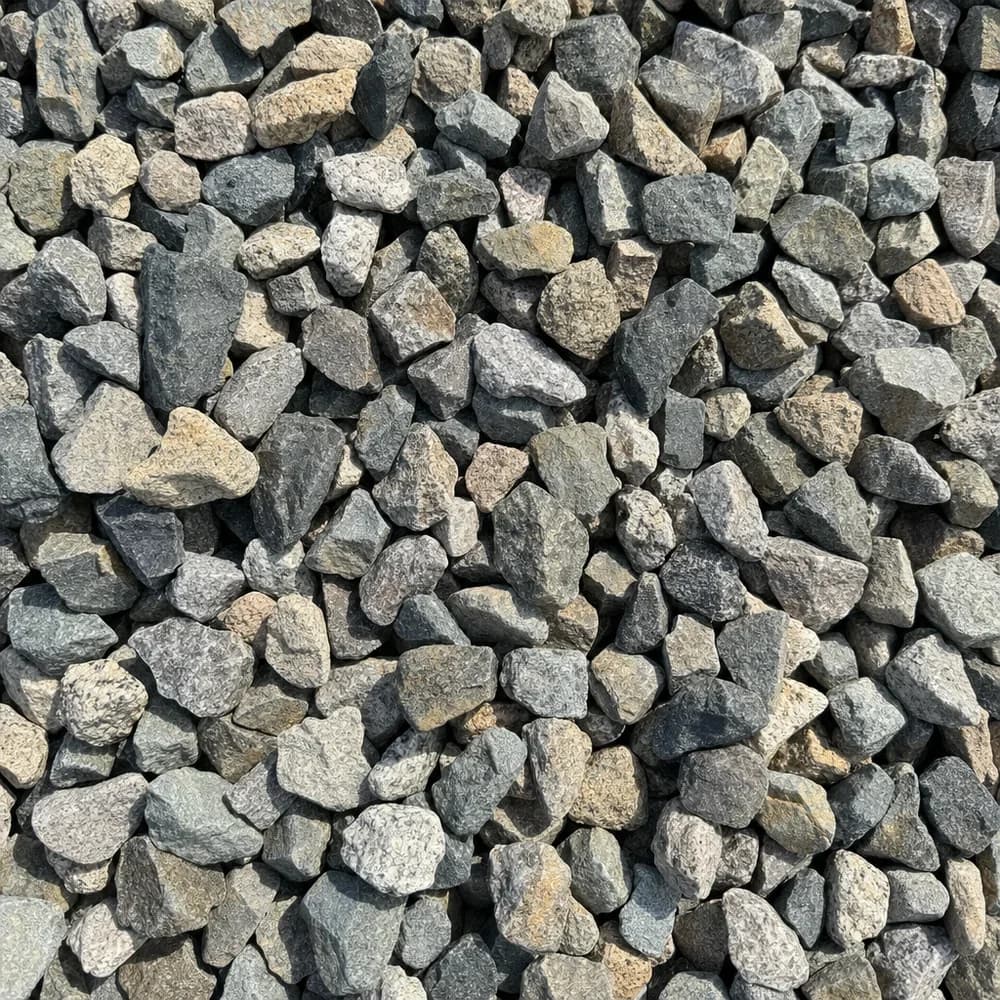
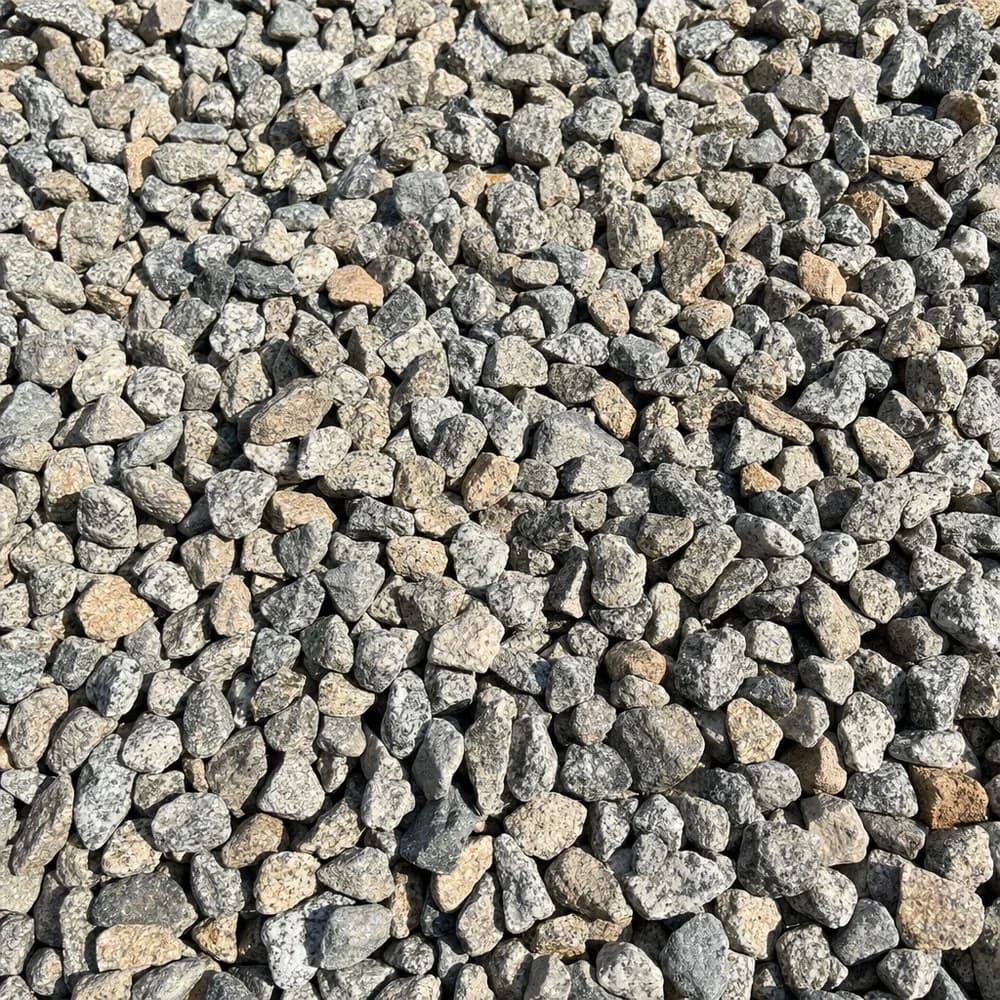
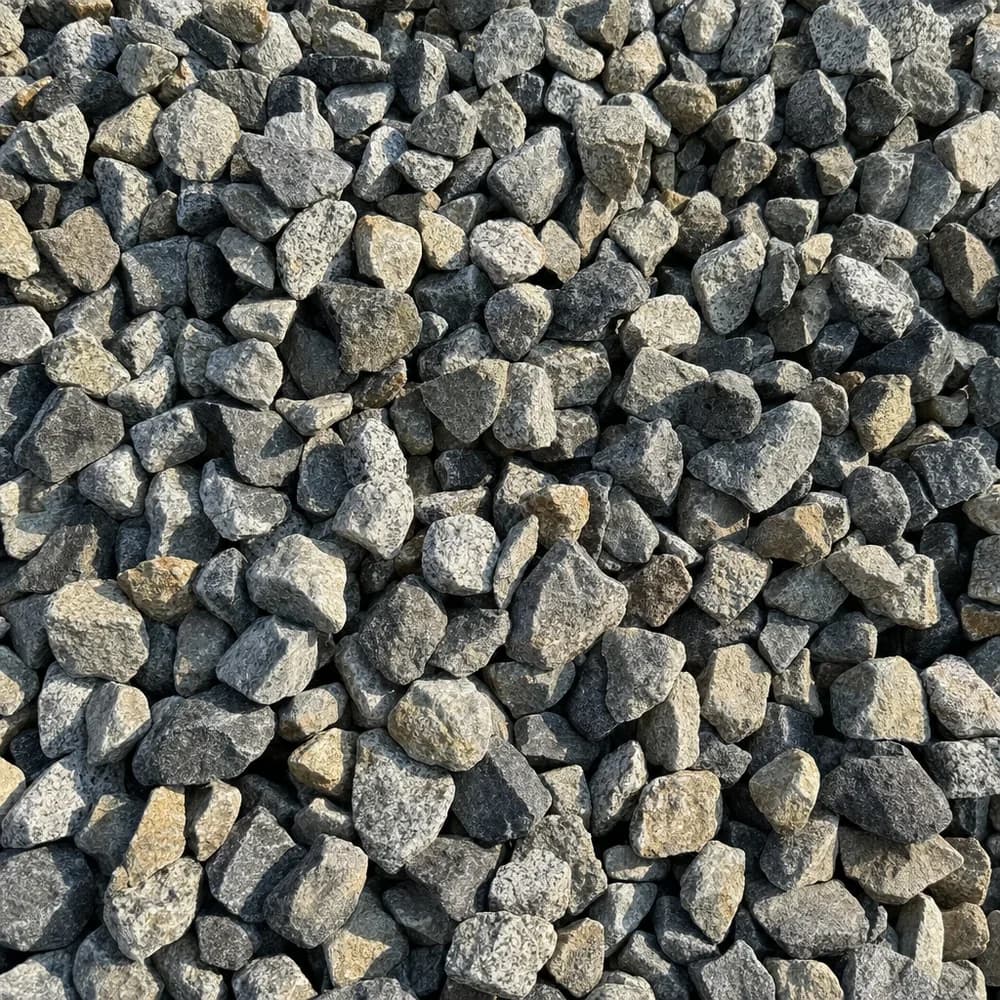
#4 Crushed Stone for Ditch Linings, Deep Drainage and Soft Ground
In California wet-season drainage work, #4 Crushed Stone helps form an open layer below driveways and other heavy-use areas.
- Size: About 3/4 inch to 1-1/2 inches
- Grading: #4
- Type: Angular crushed stone
From $482 for 1 ton, delivery included (larger loads cost significantly less per ton)
Free delivery included
Free delivery anywhere in California
Pick a delivery date
Weekday delivery, earliest Oct 29
“I wanted something with a little more weight to it for a muddy spot near the back fence. This did the job.”
Luis S. · Verified Buyer
Get a Free Quote
Fill out the form and our sales team will get back to you within the hour.
Size and Grading
- Size
- About 3/4 inch to 1-1/2 inches
- Grading
- #4
- Type
- Angular crushed stone
The mistake that sends most people here is buying the same small stone three winters running. A ditch beside a rural lane gets lined, the first big storm moves the lot of it downhill, and the following autumn the same load goes back in. #4 crushed stone is the size at which that stops. At roughly 3/4 inch to 1-1/2 inches, each piece is heavy enough that a storm running through a channel cannot pick it up, and angular enough that the pieces wedge together instead of rolling apart.
Choose #4 crushed stone when the water arrives all at once
Three conditions point at this grading. The first is volume: the voids between 3/4 to 1-1/2 inch pieces are large and continuous, so a layer of it passes water far faster than anything finer. That matters where the year's rain turns up in a handful of storms rather than spreading itself out.
The second is being in the way of moving water. In a ditch, a swale or below an outlet, smaller stone gets sorted and carried; this size mostly stays. The third is soft ground. Coarse angular stone pressed into a wet subgrade bridges it, spreading load across a weak layer so a lane or a pad can be built above it.
Skip it for a house French drain and for lifting a low spot
A French drain along a house foundation is the commonest wrong order, taking a typical perimeter run as an example. The trench is narrow, the pipe is small, and at 3/4 to 1-1/2 inches the stone bridges awkwardly around a perforated line and leaves gaps large enough that fabric gets pushed into them. The trench is also, usually, not moving much water at once. 3/4" Drain Rock or #67 Stone packs around the pipe properly and drains a domestic perimeter without any trouble.
Lifting a low spot or regrading a yard is the second. Raising a sunken area by a foot or two with coarse stone is expensive by volume and gives you a layer nothing will grow on and nothing sits flat over. Fill Dirt does the bulk of the lift, compacted as it goes, with screened top soil over it if the area is going back to planting.
There is a third boundary worth naming. Where a slope or a creek bank is genuinely being armored against storm flow, this size is too small, and the job belongs to RipRap. The rule of thumb is the flow: if water arrives at a speed that moves a stone you can lift in one hand, go heavier.
Lining a ditch and armoring a culvert outlet above a canyon road
The ditch and the outlet are the same problem at two scales. Water leaving a culvert during a storm accelerates, and whatever sits in front of it takes the energy. An apron of angular stone at the outlet spreads that flow and breaks it up before it reaches soil, and the ditch it discharges into gets the same treatment along the length where the flow stays fast.
Two details decide whether it holds. The first is what sits under the stone: a filter layer, fabric or a graded bedding, so water cannot pull the soil out from beneath the armor and leave it sitting on a void. The second is that the stone extends past where the fast water stops, not just to where it currently looks eroded, because the scour migrates downstream every season.
On the hillside lots in the Coast Ranges, the foothills and the Southern California canyons, the load case is a storm that puts a season's runoff down a slope in a day. Build for that day. And where a slope has burned recently, the first heavy rain brings debris rather than clean water, which is a different design question and one worth taking to whoever handles drainage for your parcel.
Gabions, construction traffic and the bottom of a soft lane
Gabion baskets are a natural fit, because a 3/4 to 1-1/2 inch angular stone packs a basket densely and interlocks enough that the face stays put once the basket is closed. The same size works as the entry apron where vehicles come off a site onto a paved road, since a tire flexes across coarse stone and drops the mud it is carrying rather than tracking it out.
The third job is the least visible and often the most useful: the bottom layer of a lane or pad built over ground that will not dry out. Placed on fabric and choked with a finer material above it, coarse stone gives a lane a foundation that clay alone cannot provide. Above it goes a compacted Class 2 Base, and above that the surfacing course.
It is a layer, not a surface, and it will never roll flat
This is the thing to be clear about before ordering. A washed, single-range coarse stone has no fines, so there is nothing to fill the voids and nothing to bind when it is rolled. Run a plate compactor over it and you consolidate it slightly and change nothing else. Walking on it is awkward, a wheelbarrow will not cross it, and a car turning on it scatters it.
Every use above treats it as a buried or armored layer. Where a finished surface is wanted on top, a finer material has to choke the voids and carry the wear: base rock under a drive, Driveway Gravel as the running course, or a bedding layer under pavers. Skipping that step is why people end up ordering a second material a month later.
Stone for a 45 foot ditch and an outlet apron
Take a ditch beside a lane as an example, 45 feet of it lined to a 5 foot wetted width at 8 inches thick. That is 225 square feet. Eight inches is 0.6667 of a foot, so 225 multiplied by 0.6667 comes to 150 cubic feet, and 150 divided by 27 is 5.6 cubic yards.
The apron at the culvert outlet, say 10 feet by 8 feet at a foot thick, is 80 square feet by 1 foot, which is 80 cubic feet, or 3.0 cubic yards. The two together are 8.6 cubic yards, or about 9.0 with the 5 percent the stone calculator adds by default. This site publishes about 2,900 lb per cubic yard for #4 stone, roughly 1.45 tons per yard, so 8.6 yards is approximately 12.5 tons, and about 13 tons with the 5 percent allowance.
Coarse stone is ordered by the ton, and the stone calculator does the conversion with the density it holds for this material. Measure the thickness you actually intend to place, because the difference between 8 inches and a foot across that ditch is nearly 3 cubic yards.
Getting 3/4 to 1-1/2 inch stone to where it is going
Quantity and a delivery date are both set on this page, with delivery arranged at checkout from your ZIP code. Large loose stone is the least forgiving material to drop badly: it rolls, it does not stay in a neat heap, and it is slow to move by hand. Choose a firm, level tipping point with clear overhead access and as close to the work as the truck can safely get, and board or bank the downhill side if the spot has any fall. On a rural or canyon parcel where the access road is narrow or steep, raise that through the contact page before you place the order.
Quickly Calculate How Much You Need
Material: #4 Crushed Stone
How to Measure
Measure the length and width of your project area in feet
Decide on depth in inches (2" for landscaping, 4" for driveways)
Enter the values above and we'll calculate the tonnage you need
Need help figuring out the right amount? We can help!
Call or text us at (213) 566-1318 and we'll help you calculate the right quantity for your project.
Not sure how much you need? The Stone Calculator has depth guides, coverage charts and worked examples for this material.
Frequently Asked Questions About #4 Crushed Stone
Customer Reviews
Got crushed stone from the team and ordering was easy. The delivery showed up when they said it would, and the crushed stone looked great. Super happy with the whole thing and would definitely order again.
Kevin L. · Long Beach, CA · Verified Buyer
Had these guys deliver crushed stone for a side yard project, and the driver was friendly and careful about where he dropped it.
Eric E. · San Jose, CA · Verified Buyer
Ordered crushed stone from the team and I'm really happy with how it turned out. Delivery showed up right when they said it would, which made my day way easier. The driver was friendly and careful about placing it exactly where I needed.
Nicole G. · San Jose, CA · Verified Buyer
Grabbed crushed stone from California Rock Supply and I'm really happy with it, the price felt fair and the delivery was easy.
Rob B. · Los Angeles, CA · Verified Buyer
Picked up from this company and the crushed stone was spot on. I'm really happy with how easy the whole thing was.
Luis S. · Sacramento, CA · Verified Buyer
Holds up well
I put this down in a low spot that stays wet most of the year. Water moves through it a lot better than the dirt that was there before.
Nicole G. · San Jose, CA · Verified Buyer
Solid base material
I wanted something with a little more weight to it for a muddy spot near the back fence. This did the job.
Luis S. · Sacramento, CA · Verified Buyer
Stable base material
I used this to stabilize a soft section near the back gate. It locked together well after compaction. I used it at my home in Sacramento, CA and would choose it again for a similar project.
Alex R. · Long Beach, CA · Verified Buyer
Very Pleased
I had a great experience with California Rock Supply. The #4 crushed stone worked very well for what I had planned. Communication was clear, and I would gladly order again.
Kevin L. · Long Beach, CA · Verified Buyer
#4 Crushed Stone has 9 verified customer reviews with an average rating of 4.8 out of 5.
#4 Crushed Stone delivery across California
- Los Angeles
- San Diego
- San Jose
- San Francisco
- Fresno
- Sacramento
- Long Beach
- Oakland
- Bakersfield
- Anaheim
- Stockton
- Riverside