#8 Crushed Stone for Permeable Pavers, Drain Layers and Pipe Bedding
Poor drainage at a California paver area can leave wet-season water where it does not belong. #8 Crushed Stone supports drainage details, pavers, and concrete.
- Size: About 3/32 inch to 3/8 inch
- Grading: #8, clean with little to no fines
- Type: Crushed stone
From $511 for 1 ton, delivery included (larger loads cost significantly less per ton)
Free delivery included
Free delivery anywhere in California
Pick a delivery date
Weekday delivery, earliest Oct 29
“Got crushed stone from these guys, fair price and I'd definitely order again.”
Mike R. · Verified Buyer
Get a Free Quote
Fill out the form and our sales team will get back to you within the hour.
Size and Grading
- Size
- About 3/32 inch to 3/8 inch
- Grading
- #8, clean with little to no fines
- Type
- Crushed stone
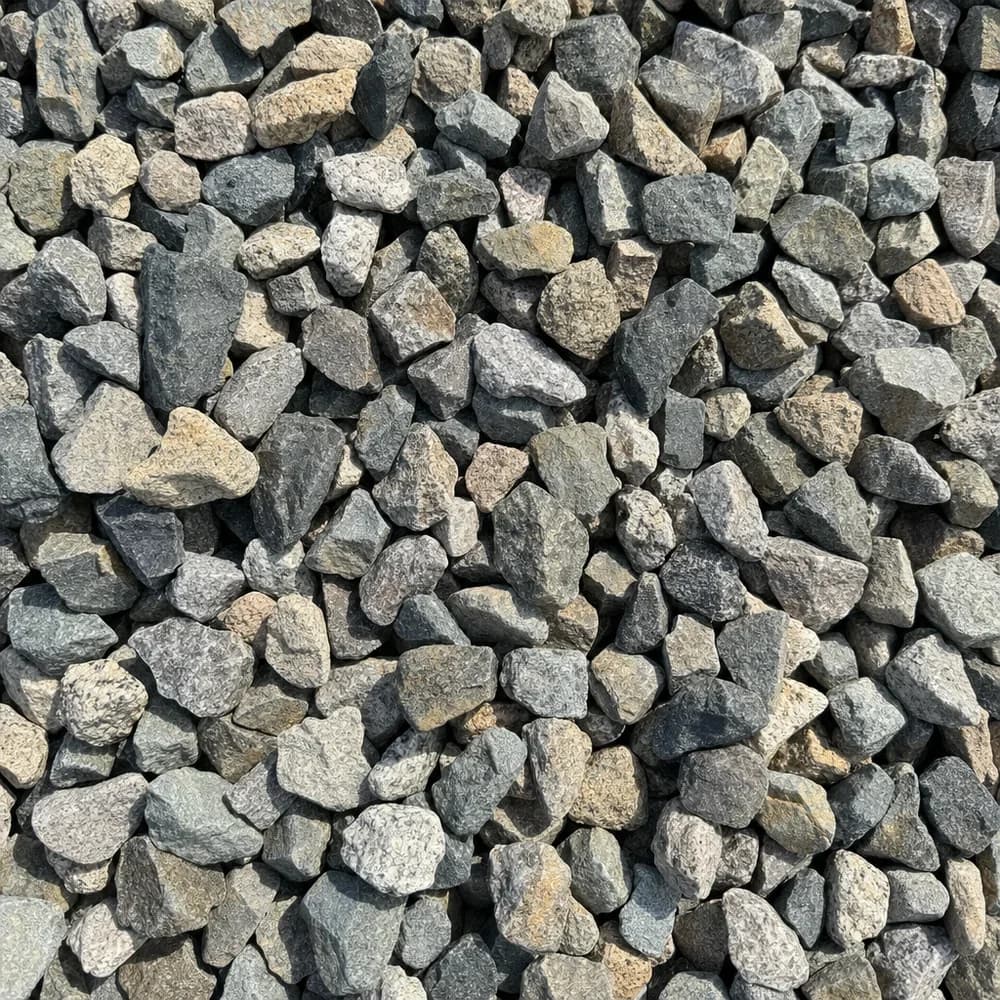
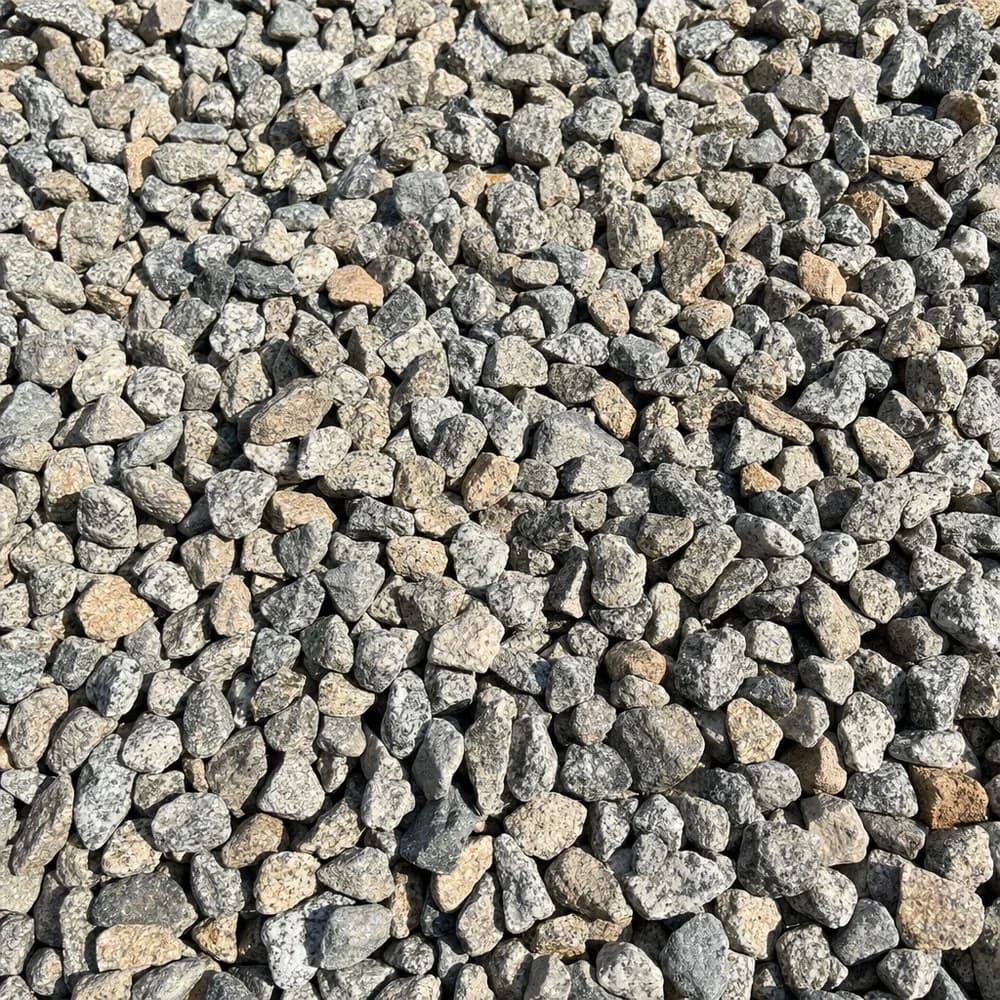
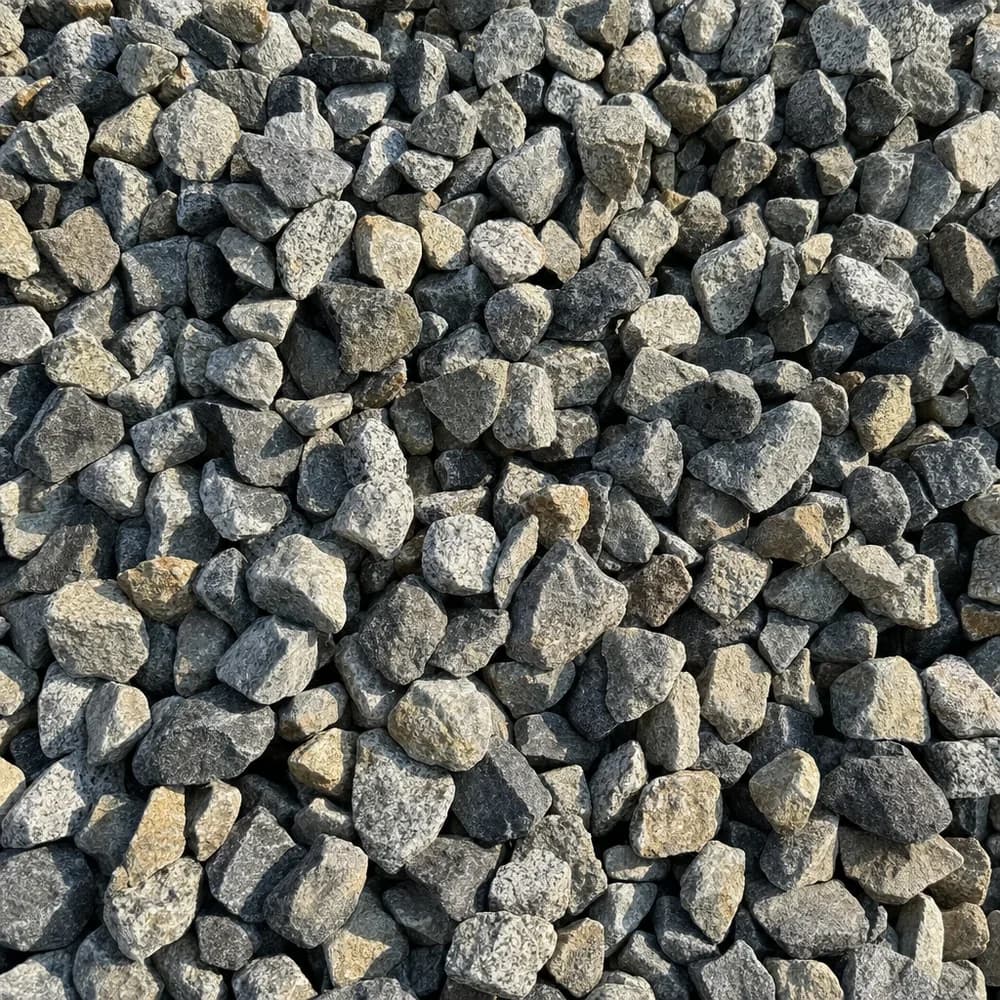
Two digits separate #8 crushed stone from #89, and on a delivery ticket they look almost identical. In the hand they are not. Tip out a scoop of this one and it rattles; the pieces are 3/32 to 3/8 inch, clean, with no dust on your palm and daylight visible into the pile. Tip out the 89 and it thuds, because it runs from 3/8 inch down to fines and those fines fill everything. One is built so water can travel through it. The other is built so a joint can be packed tight. Ordering the wrong one is the single most expensive mistake on a permeable paving job in this state.
The #8 crushed stone spec line: 3/32 to 3/8 inch, clean, almost no fines
The grading is #8: a narrow size band from about 3/32 inch to 3/8 inch, crushed rather than rounded so the pieces have flat faces and corners, and washed so there is little to no fine material left in it. That combination is the whole specification and each part of it does something.
The narrow band means the voids between pieces are consistent, which is what makes the layer behave predictably as storage and as a flow path. The angularity means the pieces wedge against each other, so a bedding course can carry a paver without spreading sideways. And the absence of fines is what keeps the voids open. That last point is worth sitting with, because it also means the layer will never firm up underfoot the way a base rock does. It is not a surface. It is a layer inside an assembly.
A permeable hot tub pad against a dog run that just needs to drain
Three jobs that all sound similar want quite different builds. Taking each as an example:
| Job | What this stone does | What sits below it |
|---|---|---|
| Hot tub pad, permeable build | Open-graded bedding directly under the units, plus the storage layer beneath | A deeper open-graded stone course over a prepared subgrade, sized for the load and the water |
| Side-yard dog run | A free-draining layer that hoses down and does not hold standing water | Fabric over the native soil, with the stone as the whole build |
| Turnaround or parking pad | Nothing useful as a surface course; it scatters under a turning wheel | Compacted base with a graded surfacing gravel, not this |
The pad is where the material earns its keep. A hot tub is a serious point load and the water has to go somewhere, and an open-graded build under the units both carries the weight and lets storm water pass straight through instead of pooling against a foundation. The dog run is the simplest case and the one most people get right: fabric, stone, done, and it hoses clean because nothing in it turns to mud.
The turnaround is the one to walk away from. Clean stone under a turning tire migrates, and after a season the pad has thin patches and windrows along the edges. That job wants Class 2 Base compacted, with Driveway Gravel as the running course.
The two remaining uses are less visible. In a drain trench or a drainage bed the open gradation moves water readily, and around water, sewer and irrigation lines the consistent size beds a round pipe evenly. It also works as a smaller coarse aggregate in concrete mixes.
Permeable paving on clay, and what a wet season does to it
A permeable assembly only works if the water has somewhere to go once it is through. On the sandy coastal and desert soils the receiving ground does that well. On the shrink-swell clay of the Coast Range valleys and the Southern California basins, and over the cemented hardpan in parts of the Central Valley, water reaching the bottom of the stone layer stops there. The storage voids fill, and on the next storm the surface ponds.
That does not rule the build out. It changes what it needs, which is usually an outlet: a perforated line at the base of the stone taking the stored water somewhere, and a stone reservoir deep enough to hold a real storm rather than an average one. Rain here arrives in a few large events, so size the storage for the event, not the annual total. On clay in particular, wetting the soil makes it swell, so getting the water out rather than letting it stand under the assembly matters for the paving above as much as for the drainage.
Where a reservoir needs real depth and volume rather than a bedding layer, a coarser washed grading such as 3/4" Drain Rock is usually the more sensible fill, with this one kept for the bedding course above it.
The other long-term threat is silt. Fines washing in from surrounding soil or off a nearby surface will close those voids over a few wet seasons. Wrap the stone in filter fabric, keep bare soil from draining across the assembly, and give the surface somewhere to shed in an extreme storm.
Ordering by the ton for an 8 by 8 hot tub pad
Take an 8 foot by 8 foot hot tub pad as an example, built as a 6 inch open-graded course with a 2 inch bedding layer of the same stone over it. The pad is 64 square feet.
Six inches is half a foot, so 64 multiplied by 0.5 is 32 cubic feet, which is 1.2 cubic yards. The 2 inch bedding is 64 multiplied by 0.1667, or 10.7 cubic feet, which is 0.4 of a cubic yard. Together that is about 1.6 cubic yards, or 1.7 with the 5 percent the stone calculator adds by default.
For comparison, a side-yard dog run 42 feet by 5 feet at 3 inches is 210 square feet times 0.25, which is 52.5 cubic feet, or 1.9 cubic yards. Orders are placed in tons, and the stone calculator converts the volume using the density held for this material. Check your own arithmetic against it, because the two layers of a pad are easy to enter as one. This site publishes about 2,800 lb per cubic yard for 3/8 inch chips of this grading, roughly 1.4 tons per yard, so the 1.6 yard pad is approximately 2.2 tons and the 1.9 yard dog run about 2.7.
The day the truck comes: access, a tipping spot and clean stone on a slope
Quantity and a delivery date are chosen on this page, and delivery is arranged at checkout from your ZIP code. Three things are worth doing before the load arrives.
Pick the tipping spot and look up as well as down. The truck needs a firm, level place to dump with clear headroom and room to leave without reversing blind down a lane. Then think about roll. Clean stone with no fines behaves like marbles on any fall at all, so if the only flat spot has a slight slope, board the downhill side or lay a tarp with a lip. Finally, get the excavation and the fabric finished first. Stone that goes straight from the heap into the trench is handled once; stone that waits a week on a drive gets handled three times and picks up soil on the way.
If you are unsure which of the two gradings your paver detail specifies, check the detail before ordering rather than after, or send it through the contact page. If base or surfacing material is going in on the same visit, browse the full range before you check out.
Quickly Calculate How Much You Need
Material: #8 Crushed Stone
How to Measure
Measure the length and width of your project area in feet
Decide on depth in inches (2" for landscaping, 4" for driveways)
Enter the values above and we'll calculate the tonnage you need
Need help figuring out the right amount? We can help!
Call or text us at (213) 566-1318 and we'll help you calculate the right quantity for your project.
Not sure how much you need? The Stone Calculator has depth guides, coverage charts and worked examples for this material.
Frequently Asked Questions About #8 Crushed Stone
Customer Reviews
Decided on California Rock Supply for crushed stone, and I'm really happy with it because the crushed stone was great quality and the delivery went smoothly.
Heather S. · Los Angeles, CA · Verified Buyer
Went with California Rock Supply for crushed stone and I'm really happy with how it turned out. Delivery showed up as planned, and the driver was friendly and careful about where he placed it. I'd definitely order from them again.
Hank P. · San Francisco, CA · Verified Buyer
Decent for the price
I'd use it again for a basic landscaping project.
Mike R. · Los Angeles, CA · Verified Buyer
Got crushed stone from these guys, fair price and I'd definitely order again.
Mike R. · Los Angeles, CA · Verified Buyer
Grabbed crushed stone from them and it showed up right on time. The driver was friendly and careful about where he placed it, which made the whole thing easy.
Mark T. · San Jose, CA · Verified Buyer
Had crushed stone delivered by California Rock Supply, and the driver was super friendly and careful about where he placed it.
Rob E. · San Diego, CA · Verified Buyer
Tidy around shrubs
I used the small stone around shrubs. It was easy to place by hand and looked tidy once settled. I was pleased with how well it fit the project at my home in San Diego, CA.
Rowan E. · Los Angeles, CA · Verified Buyer
#8 Crushed Stone has 7 verified customer reviews with an average rating of 4.9 out of 5.
#8 Crushed Stone delivery across California
- Los Angeles
- San Diego
- San Jose
- San Francisco
- Fresno
- Sacramento
- Long Beach
- Oakland
- Bakersfield
- Anaheim
- Stockton
- Riverside