Railroad Ballast for Ground That Keeps Swallowing Gravel
During California's wet season, Railroad Ballast provides a load-bearing, open stone foundation for work roads and equipment pads.
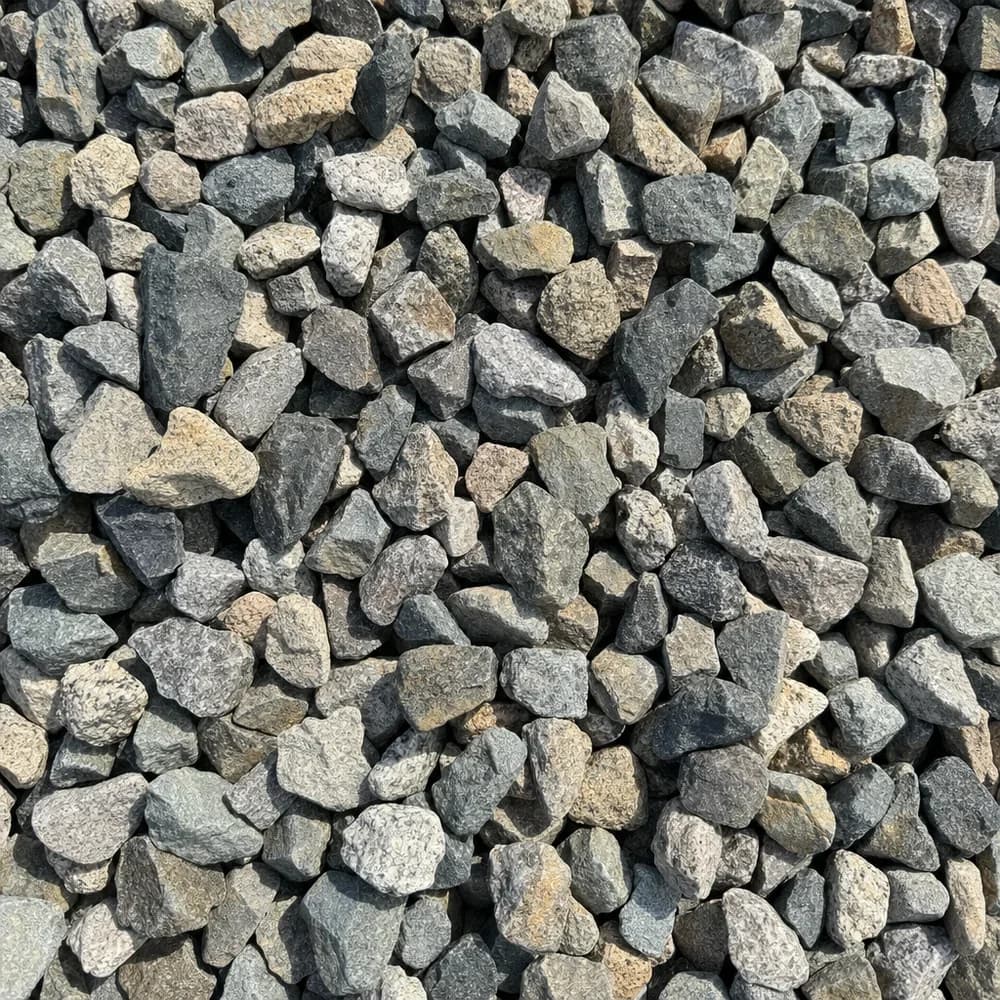
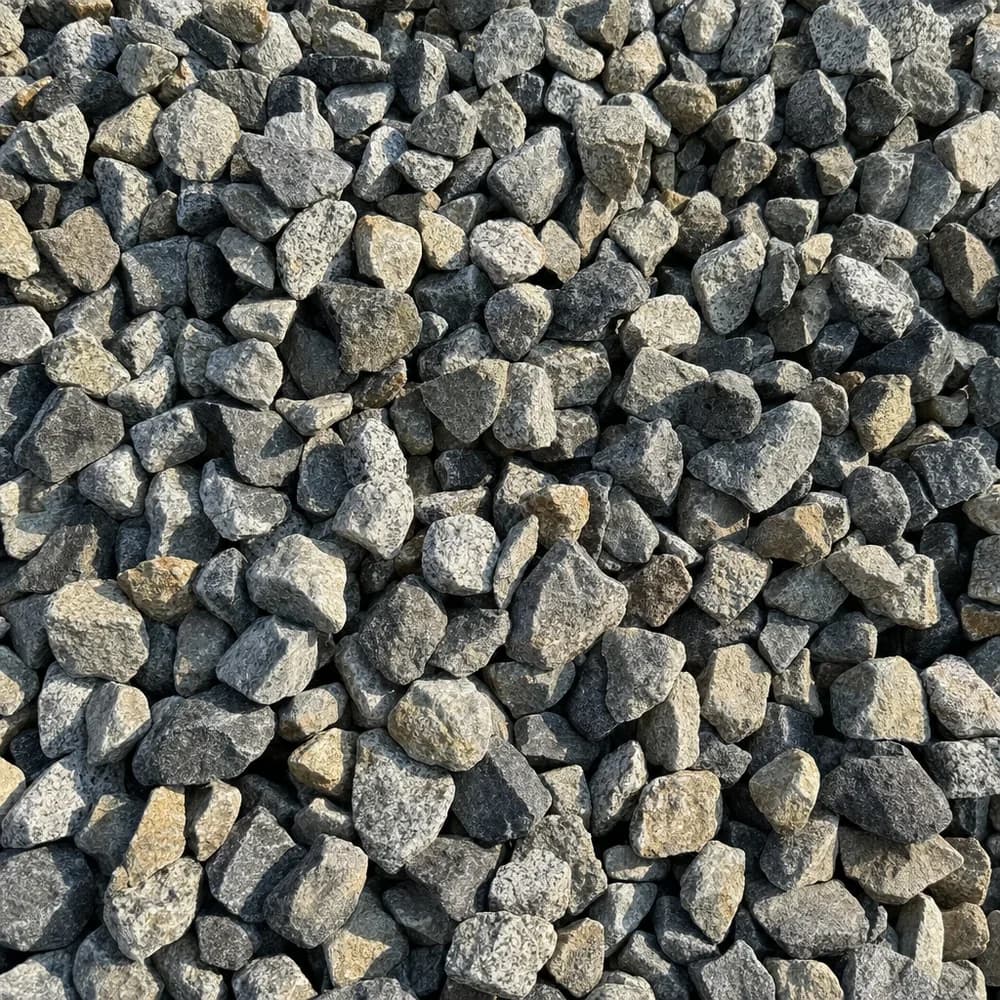
- Size: Roughly 1 inch to 2.5 inches
- Grading: Graded to interlock under load while draining freely
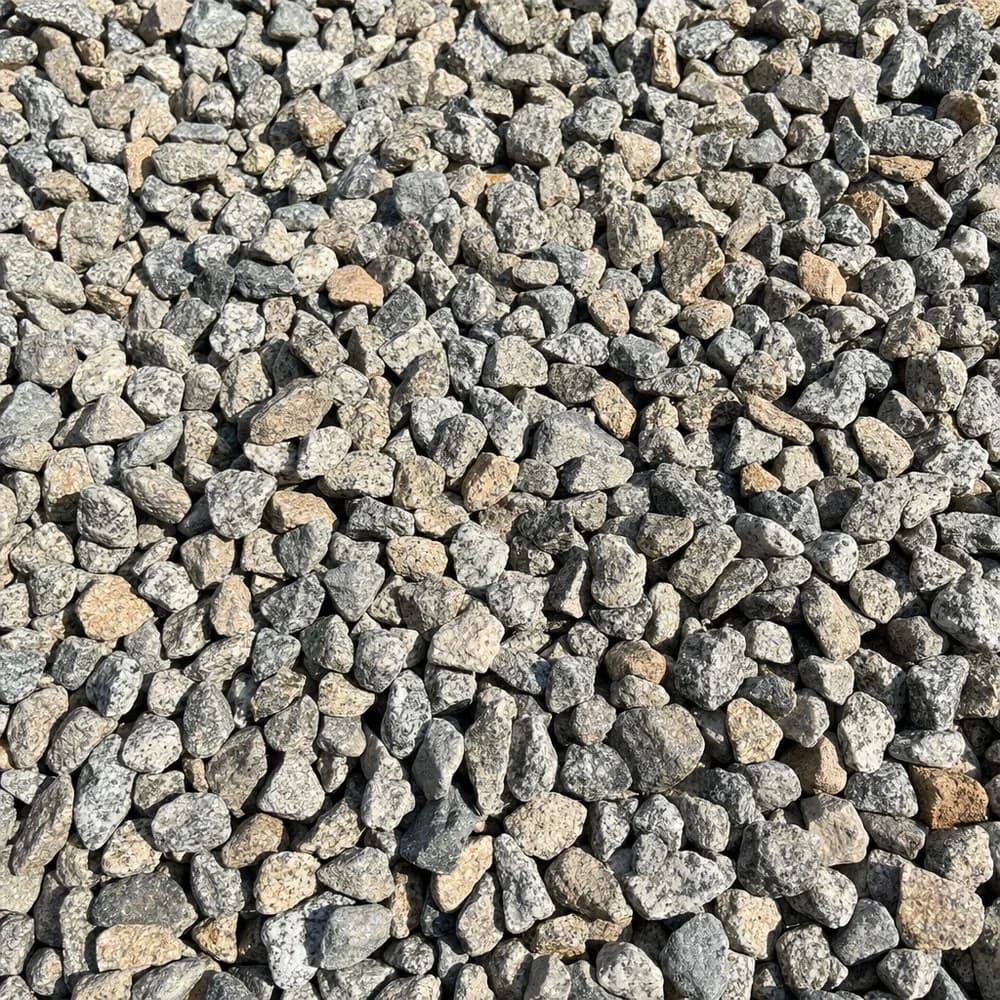
- Type: Large angular crushed stone
From $482 for 1 ton, delivery included (larger loads cost significantly less per ton)
Free delivery included
Free delivery anywhere in California
Pick a delivery date
Weekday delivery, earliest Oct 29
“Had railroad ballast delivered by this company and the whole order was no hassle. They kept me updated the whole time and communication was easy. Really happy with how it all went, 5 out of 5.”
Tom W. · Verified Buyer
Get a Free Quote
Fill out the form and our sales team will get back to you within the hour.
Size and Grading
- Size
- Roughly 1 inch to 2.5 inches
- Grading
- Graded to interlock under load while draining freely
- Type
- Large angular crushed stone
The order almost always follows a failure. A yard, a lane or a parking corner was gravelled two winters ago, the stone has gone, and the ground underneath is back. Nobody stole it. It was pushed down into soft ground under load, a little at a time, every time a wheel crossed it in wet weather. Railroad ballast is the coarse end of the range, and the decision a buyer is really making here is whether the problem is the surface or what is under it.
Ground that pumps mud up through a gravel layer every winter
Wet clay under a wheel behaves like a pump. Load presses down, water and fine soil are forced up between the stones, the voids fill, and the layer that was draining and spreading load turns into a mixture of gravel and mud that does neither. Across the flood basins of the valley floor and the clay valleys inland from the coast, that cycle runs for four or five months a year, since most of the rain arrives in a handful of storms and the ground never gets a chance to dry between them.
Large angular stone resists it for two reasons. The pieces are heavy enough not to be shifted easily, and at 1 inch to 2.5 inches the voids are so large that a small amount of intruding soil does not close them. The layer keeps draining, keeps spreading load, and keeps the wheel off the soft ground below.
Why valley clay and foothill hardpan defeat a thin lift
Depth is doing the work here, not hardness. A 2 inch scatter of any stone on soft ground is a sacrifice, not a base. The layer has to be thick enough that the load reaching the soil beneath is spread across a wide footprint instead of arriving under the tire.
On the valley floor the constraint is soft, saturated clay and a hardpan a few feet down that keeps water in the upper soil. In the Sierra foothills it is the opposite: shallow soil over rock, with water running fast across the surface and collecting exactly where a drive or pad cuts into the slope. Both cases want the same answer, which is a deep coarse lift with somewhere for the water to go at the edge, and a graded subgrade rather than a hole that fills up.
Laying a coarse bottom lift, then capping it
Strip the soft, churned material off first rather than burying it. Shape the subgrade so it falls towards a clear outlet, and roll a woven geotextile across it where the ground is genuinely soft, since keeping soil and stone apart is worth more than another inch of rock.
Place the ballast in a single lift and track it in with the machine that delivers it or a loader bucket rather than trying to compact 2 inch stone with a plate. It will not tighten the way a graded material does; it interlocks, and interlock is what carries the load. Then cap it. A finer layer over the top fills the surface voids and gives you something to walk on, steer on and rake level, which is where 3/4" Crushed Stone or a compacted Class 2 Base course comes in. The ballast is the structure. The cap is the surface.
Too coarse for a xeriscape bed, too deep for a downspout
Two jobs come up regularly and the size is wrong for both.
A rock garden or low-water planting bed wants stone you can spread at 2 or 3 inches and rake level around plants. Ballast at 2.5 inches cannot be laid thinner than the stones themselves, it reads as construction material rather than landscape, and weeding between pieces that size is miserable. River Cobble or Pea Gravel is what that bed is asking for.
A downspout splash area is the same mismatch at smaller scale. What it needs is a stone heavy enough not to wash away in a concentrated roof flow but small enough to sit in a shallow pocket. Rounded cobble does that in a 6 inch pocket. Ballast in the same pocket is one stone deep and looks it.
Sizing a 14 by 20 shed pad and a 24 by 30 equipment corner
As an example, a shed or garage pad of 14 by 20 feet is 280 square feet. A 6 inch ballast lift is 280 x 0.5, or 140 cubic feet, and 140 divided by 27 is 5.2 cubic yards. This site publishes about 2,900 lb per cubic yard for stone in the #4 and ballast family, which is 1.45 tons per yard, so 5.2 x 1.45 gives 7.5 tons. The 3 inch capping course over it is 280 x 0.25, or 70 cubic feet, which is 2.6 cubic yards and about 3.6 tons of 3/4 inch stone at 1.4 tons per yard.
An equipment or trailer corner of 24 by 30 feet is 720 square feet, and on ground that has already failed once an 8 inch lift is realistic: 720 x 0.667 is 480 cubic feet, or 17.8 cubic yards, which comes to 25.8 tons. Round to 26. The stone calculator will rerun those depths if the footprint changes.
What to check on the pad after the first heavy storm
Look at the edges and the low corner. Coarse stone migrates outward where nothing restrains it, and the first serious storm shows you where water is entering and leaving the pad rather than passing under it. A rut forming in one line means load is concentrating there and the lift is thin at that point.
None of that is a failure. Pull the strays back in, add stone to the low corner, and if water is running onto the pad from a slope above, intercept it uphill rather than deepening the pad. Ballast that has interlocked and settled in its first wet season is at its strongest afterwards, and a pad built this way asks for very little once it has been through one winter.
What a heavy load needs from the yard before the date is set
Quantity and a delivery date are picked here, with delivery arranged at checkout against your ZIP code. The thing worth planning is the drop. This is the heaviest material most people will order, it is tipped rather than placed, and stone this size runs when it lands on a slope. Choose firm, level ground with clearance overhead, board or bank the downhill side before the truck arrives, and keep the pile within reach of whatever is moving it, since 2 inch stone is slow going by wheelbarrow. If the access is narrow, steep or shared, settle it through the contact page before you choose a date.
Quickly Calculate How Much You Need
Material: Railroad Ballast
How to Measure
Measure the length and width of your project area in feet
Decide on depth in inches (2" for landscaping, 4" for driveways)
Enter the values above and we'll calculate the tonnage you need
Need help figuring out the right amount? We can help!
Call or text us at (213) 566-1318 and we'll help you calculate the right quantity for your project.
Not sure how much you need? The Stone Calculator has depth guides, coverage charts and worked examples for this material.
Frequently Asked Questions About Railroad Ballast
Customer Reviews
Very Pleased
California Rock Supply provided a smooth experience all the way through. The quality of the railroad ballast was just what I was looking for. I am happy with the result and would recommend them.
Jennifer L. · Fresno, CA · Verified Buyer
Ordered railroad ballast from this company and the free delivery was a nice surprise. Driver was friendly and took his time placing it right where I needed it.
Stephanie R. · Long Beach, CA · Verified Buyer
Had railroad ballast delivered by this company and the whole order was no hassle. They kept me updated the whole time and communication was easy. Really happy with how it all went, 5 out of 5.
Tom W. · San Francisco, CA · Verified Buyer
Decided on railroad ballast from this company and I'm really happy with how it turned out. The driver was friendly and careful about where he placed it, which made the whole delivery super easy.
Jason K. · Fresno, CA · Verified Buyer
Ordered railroad ballast from them and it showed up on time, good clean load, would definitely order again and recommend.
Jason H. · San Francisco, CA · Verified Buyer
Would Order Again
Everything went smoothly with my order from California Rock Supply. The quality of the railroad ballast was just what I was looking for. The project came together well, and I am happy with my purchase.
Stephanie R. · Long Beach, CA · Verified Buyer
Railroad Ballast has 6 verified customer reviews with an average rating of 4.7 out of 5.
Railroad Ballast delivery across California
- Los Angeles
- San Diego
- San Jose
- San Francisco
- Fresno
- Sacramento
- Long Beach
- Oakland
- Bakersfield
- Anaheim
- Stockton
- Riverside