Gravel and Class 2 Base Calculator for California Yards
Enter your project dimensions
In most of California, a gravel surface spends months bone-dry and then takes a season's worth of rain in a few winter storms. That swing, more than cold, decides how thick your rock should be. This gravel calculator handles the volume and weight; the ground notes below help you choose the depth you enter.
Clay, hardpan, sand or slope: picking a depth for California ground
Clay valleys and hills. Heavy clay in the Coast Range valleys, many Southern California basins and parts of the Central Valley swells when wet and shrinks and cracks when dry. Under a drive or patio, that movement is why a compacted Class 2 base layer matters. A thin layer rides the clay up and down and breaks apart. Plan the base as a real structural layer, not a skim coat, and slope it so storm water leaves the surface.
Hardpan. Across parts of the Central Valley, a cemented layer a few feet down stops water from soaking in. Rock over flat hardpan ground can hold water after an atmospheric river, so the depth you enter should come with a plan for where runoff goes.
Sandy coast and desert. Sandy soils near the shore and on desert fans take water quickly, which helps drainage but gives loose footing. A compacted base still carries the load. In the desert, short bursts of intense rain can scour a surface that sits in a wash, so keep driveways and pads out of the flow path.
Mountain towns. At elevation in the high Sierra and the northern mountains, freeze-thaw is a real design factor and the local building department sets frost depth. Talk to them before settling on a base thickness.
Foothill slopes. Winter rain runs fast over shallow soil and rock, so a drive cut across a slope needs a way to shed water, not just more gravel. Where that means a stone-filled trench beside the drive or behind a wall, sizing clean drain rock is a separate calculation from the drive itself.
Entering a lawn-replacement footprint
The tool asks for the shape first: Rectangle takes length and width in feet, Circle takes a diameter, and Multiple areas adds up to five pieces. That last option suits the irregular footprints of lawn-replacement projects, where a path, a seating nook and a side strip can be totaled in one pass.
Depth goes in as inches, from 0.25 to 24. Enter the compacted thickness you want to end up with. Then select the material and decide on the "add 5% extra for compaction & spillage" option. Results appear as cubic yards, tons and cubic feet, and Email my quote sends the figures to you in writing.
How Class 2 base and DG convert to tons
Volume first: length in feet, times width in feet, times depth in inches over 12, gives cubic feet. Twenty-seven cubic feet make one cubic yard. Weight comes next, using the factor for the material you selected.
| Fine and crushed gravels | Base materials | Rounded stone | |
|---|---|---|---|
| Included | driveway and walkway gravel, 3/8" pea gravel, #57 and 3/4" crushed stone | crusher run, road base | river rock, 1-3" |
| Weight per yd³ | about 2,800 lb | about 3,000 lb | about 2,700 lb |
| Tons per yd³ | 1.40 | 1.50 | 1.35 |
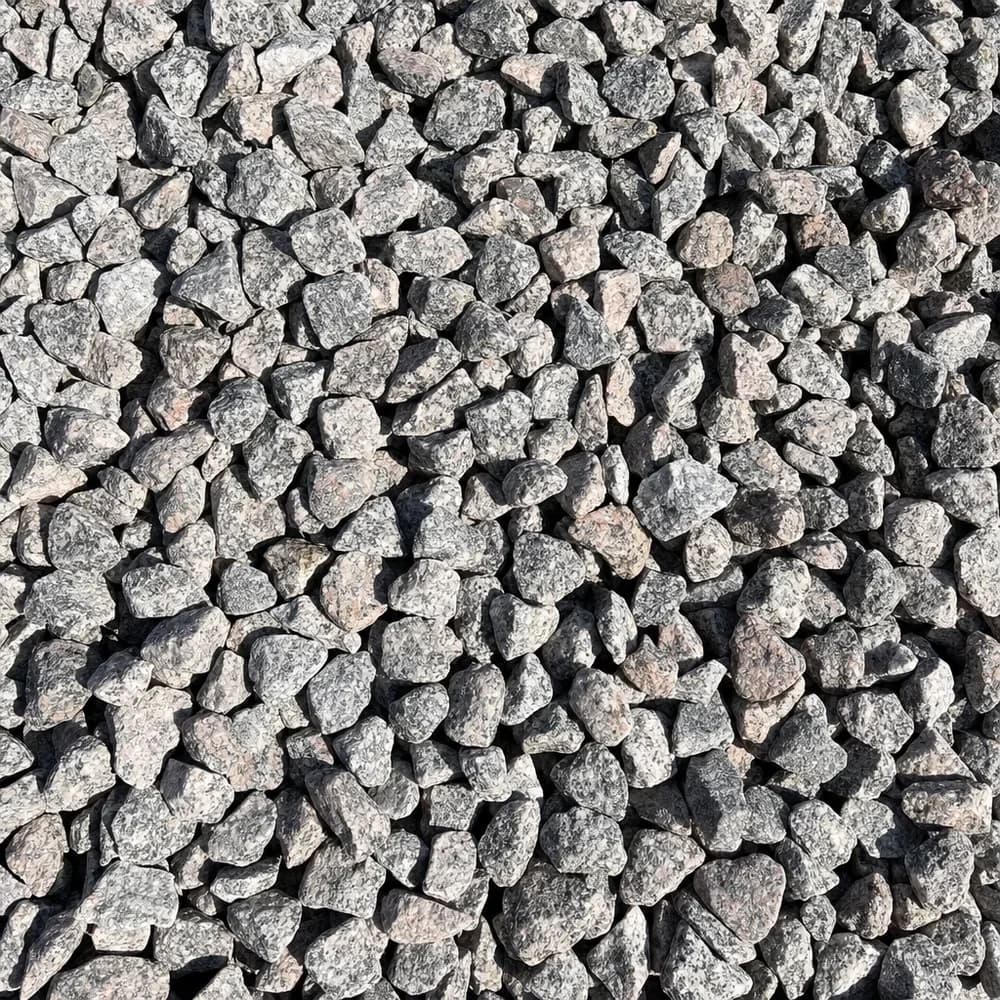
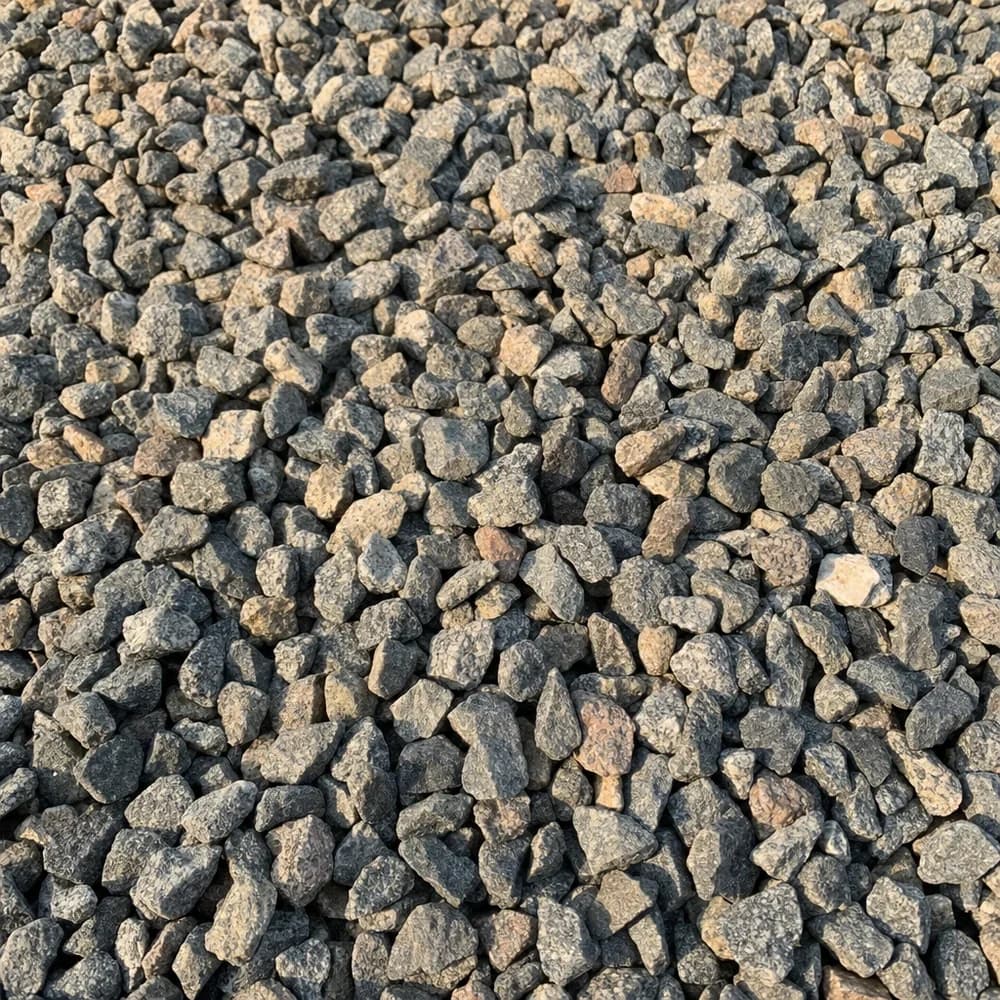
Class 2 base is the road-base product here, so it uses the middle column. Decomposed Granite isn't in this table, so for DG the calculator's volume is the reliable figure, and the product page is where to confirm weight.
A valley pad, a driveway and a DG-jointed path
The three examples below are illustrations, not client work.
An equipment pad on a valley lot
A 24 x 36 ft pad for a tractor and trailer, built with 8 inches of Class 2 base placed in two compacted lifts. That's 24 x 36 x 8 ÷ 12 = 576 cubic feet, or 21.3 cubic yards. At 1.50 tons per yard, that's 32.0 tons, and 33.6 tons with the 5% option. On clay, grade the pad slightly so water runs off it rather than soaking into the edges.
A single-car driveway
A 45 x 11 ft drive, with the base and surface sized separately. The base is 4 inches of Class 2: 45 x 11 x 4 ÷ 12 = 165 cubic feet, which is 6.11 yards x 1.50 = 9.17 tons. The surface is 2 inches of driveway gravel: 82.5 cubic feet, which is 3.06 yards x 1.40 = 4.28 tons. Together that's roughly 13.4 tons before the 5% option, and about 14.1 tons with it.
A flagstone walkway with DG joints
A path 36 ft long and 4 ft wide. The base is 4 inches of Class 2: 36 x 4 x 4 ÷ 12 = 48 cubic feet, or 1.78 yards and 2.67 tons. The setting bed is 1.5 inches of DG over the same footprint, which is 18 cubic feet, or 0.67 cubic yards. Flagstone with open DG joints lets some rain soak through instead of running off, which suits a low-water garden.
Rounding up on curved garden beds
The 5% option covers compaction and handling loss for most base work. Beyond that, the clearest way to add margin is at the tape: round each measurement up to the next foot, especially on curved garden beds. For decorative top layers, the calculator figure on its own is usually close enough. Leftover Class 2 rarely goes to waste, since it can patch a pad or fill a washout after a storm.
Delivery is arranged at checkout by ZIP code, and the truck needs clear, firm access to the place it dumps.
Class 2 base, a date and a spot for the truck
With your quantities in hand, go to the product page to choose a date and quantity. To talk through a design detail, such as DG versus gravel for a path, use the contact page. The material calculators hub covers soil, sand and mulch for the planting side of the project.
Common questions
My patio wraps around the corner of the house. How do I measure it?
Pick Multiple areas and divide the patio into two rectangles that don't overlap, one along each wall. Enter both at the same depth and the tool adds them together. You can use up to five pieces.
Does the steel or paver border count as part of the area?
Leave out a border that's already installed and measure inside it. If the base will run under a new border, include the border's width so the edge sits on compacted rock.
How far down should I excavate for a base?
Dig to the full thickness of base plus any surface layer, and go lower if you hit soft or organic soil. The calculator only needs the thickness of the rock itself.
Where should a large load of base rock be dropped?
Choose a firm, flat spot close to the work that the truck can reach without crossing soft ground, septic lines, or low branches. After a winter storm, give clay ground time to firm up first.
Loose rock compacts. Should I enter a deeper number to make up for it?
Enter the finished, compacted depth and tick the 5% option. On soft ground or deep base, round your measurements up a little as well, rather than inflating the depth.
Related calculators
That tonnage ships free.
Driveway gravel, #57, crusher run: priced by the ton, delivered across California.