#89 Crushed Stone for Paver Joints, Flagstone Bedding and Pad Finishes
Wet-season rain in California calls for #89 Crushed Stone where compacted fill is needed in paver joints, flagstone bedding, chip-seal work, or concrete.
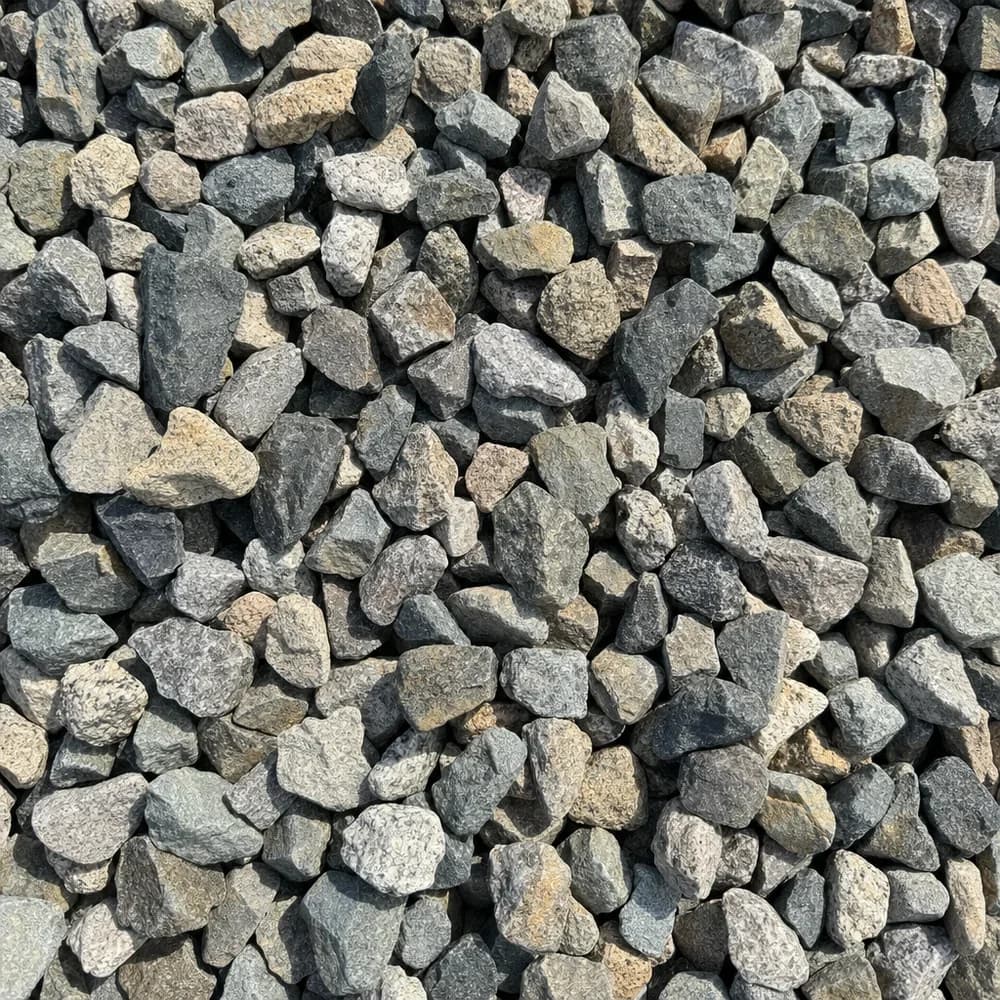
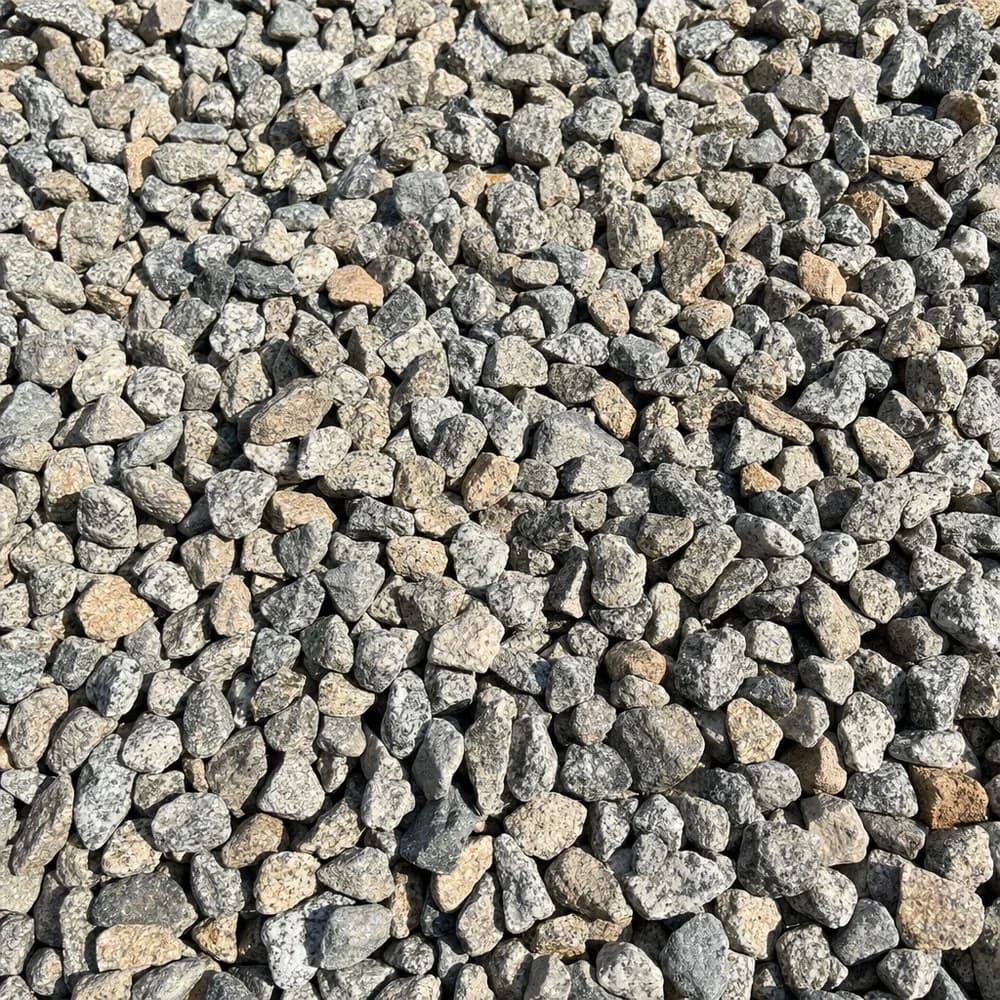
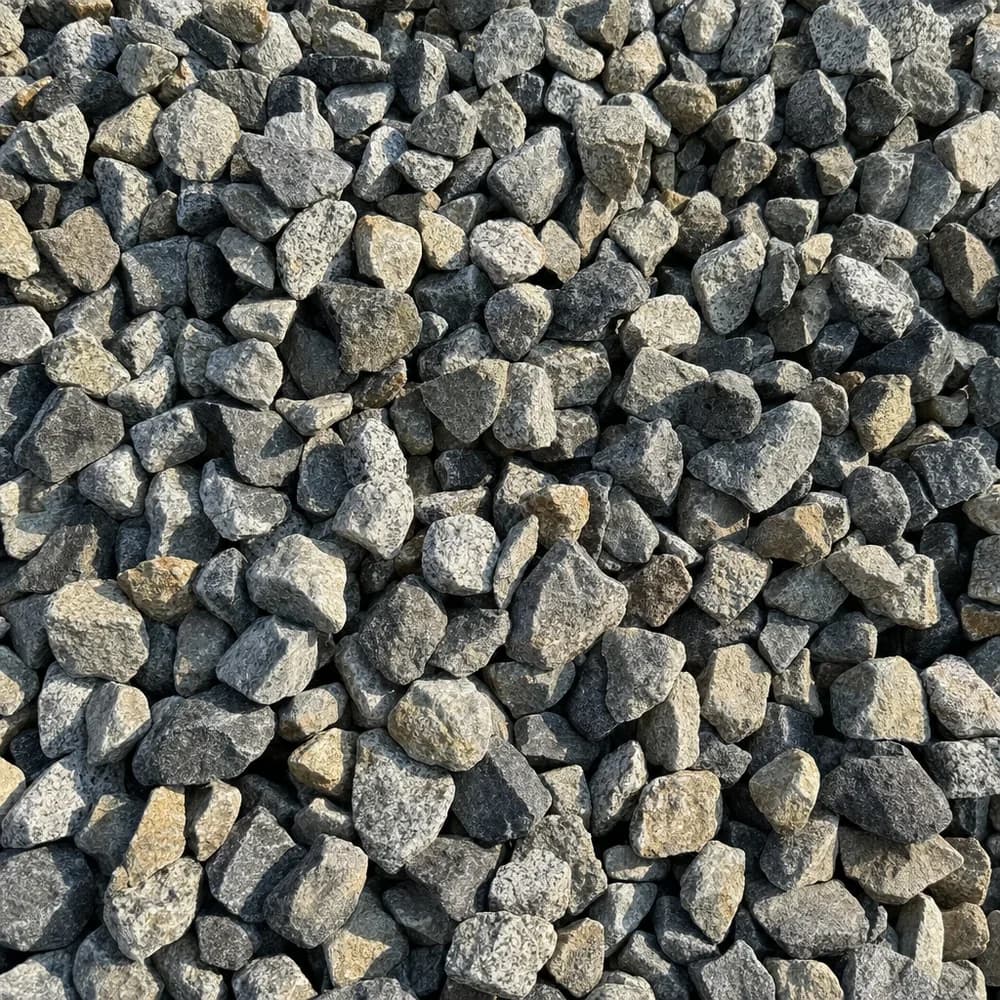
- Size: About 3/8 inch down to fines
- Grading: #89, carries some fines
- Type: Angular crushed stone
From $482 for 1 ton, delivery included (larger loads cost significantly less per ton)
Free delivery included
Free delivery anywhere in California
Pick a delivery date
Weekday delivery, earliest Oct 29
“Grabbed crushed stone from the team and I'm really happy with how easy it was, especially with the free delivery.”
Greg F. · Verified Buyer
Get a Free Quote
Fill out the form and our sales team will get back to you within the hour.
Size and Grading
- Size
- About 3/8 inch down to fines
- Grading
- #89, carries some fines
- Type
- Angular crushed stone
Most of the yards this goes into sit on ground that moves. Clay through the Coast Range valleys and the inland basins swells through the wet months and shrinks back in summer, and anything set on it with a loose joint or a thin bed will telegraph that movement within a year. #89 crushed stone is the fine, fines-carrying aggregate used to make those details tight: packed into paver joints, screeded under flagstone, or compacted as the finish on a pad. It is bought to stop movement, not to drain.
Why the joint work waits for the dry months in a valley yard
Timing is not a detail on this material, it is most of the job. The aggregate only does what it is meant to do when it is compacted at the right moisture, and in the wet months the ground beneath it is soft and the material itself arrives wet through. Across the valleys, the coast and the deserts, the working window runs from late spring into fall and the thing that closes it is rain rather than cold.
There is a sequencing reason too. Joints packed in October have a whole winter to be tested before anyone is back on site to look at them, while the same work done in June settles, gets walked on, and shows you what needs topping up while the weather still allows a fix. Anyone working at elevation in the Sierra Nevada or the northern mountains has a shorter window again, since frozen and snow-covered ground closes the season early and the spring thaw leaves the ground soft well into the year.
Prepping a base in June for a surface that has to survive January
The preparation is what the summer is for. Whatever is going to move under this layer should be made to move before it goes down. That means excavating to a consistent depth, taking out soft organic topsoil, and building a compacted layer of Class 2 Base where anything will carry weight. Shape that base to a fall so water crosses the finished surface and leaves at an edge, because this aggregate carries fines and packs tight, which is another way of saying water will not travel down through it.
Place it in the same condition you would place any fines-bearing material: damp enough that a squeezed handful holds, not wet. Compact in passes rather than in one go. Then leave the edge detail until last and make it real, since a packed joint or a screeded bed with nothing holding its perimeter loses material to the first winter.
#89 crushed stone in joints, flagstone beds and the top of a pad
Four jobs cover most of what leaves here. Paver and flagstone joints are the first: the material brushes down into the gaps between units and firms up, so the pieces hold position against each other instead of rocking.
Bedding is the second. Under flagstone, brick or a stone walkway, a thin screeded layer of it fills the hollows on the underside of irregular pieces and gives each one continuous support. Taking a 48 foot flagstone walk as an example, that bedding is typically a thin course rather than a deep one, because depth in a bedding layer is what lets units settle unevenly.
The third is chip seal work, where the angular fine grade keys into the binder on a treated surface. The fourth is a compacted finish layer, and this is where the pole barn or equipment pad comes in. Over a properly built base, a thin top course of this material packs into a tight, even surface that a machine can sit on and a broom can clean, which is more than a washed stone will give you.
Where the surface is a garden path rather than a pad, Decomposed Granite is the finer material that sets up harder and reads better between plantings, and it is the one most people are weighing this against for a walkway.
A single-car gravel drive is the borderline case. The fines mean it will pack rather than scatter, which is more than can be said for a clean stone, but it is finer than a drive surface wants and it will dust through a long dry summer. Driveway Gravel is the more durable running course, with this material kept for the details around it. And where a build genuinely needs water to pass through, the fines here are the problem rather than the feature, and the job belongs to #8 Crushed Stone or #67 Stone.
Bedding a 48 foot flagstone walk and topping a 30 by 40 pad
Take the flagstone walk first, 48 feet long and 3.5 feet wide, with a 1.5 inch screeded bed under the stones. That is 168 square feet. An inch and a half is 0.125 of a foot, so 168 multiplied by 0.125 comes to 21 cubic feet, and 21 divided by 27 is 0.8 of a cubic yard. The 5 percent the stone calculator adds by default leaves it at roughly the same figure, which on a job this size means ordering the next sensible quantity up rather than trying to hit it exactly.
Now the pad, as a separate example: 30 feet by 40 feet finished with a 2 inch top course over a compacted base. That is 1,200 square feet. Two inches is 0.1667 of a foot, so 1,200 multiplied by 0.1667 is 200 cubic feet, which is 7.4 cubic yards, or about 7.8 with the allowance.
Both are ordered in tons, so the stone calculator makes the conversion using the density it holds for this material. Run the volumes yourself first: a bedding layer that creeps from 1.5 inches to 3 inches doubles the order and makes the finished walk worse, not better. As a rough guide, this site publishes about 2,800 lb per cubic yard for #89 chips, or 1.4 tons per yard, which puts the 0.8 yard bedding layer near 1.1 tons and the 7.4 yard pad at approximately 10.4 tons.
The first winter: what settles, what washes and what to top up
Joints drop. That is normal and it is the main thing to look at after the first few storms, because a joint that has settled half an inch is an opening for water and for the seeds that come with it. Top it up, brush it in and compact it again while the weather allows.
On a pad or a walk, look for two other things. Material collecting at the low edge means the fall is carrying fines off the surface, which points at either too much slope or no edge restraint. Soft or pitted patches after a storm mean water is standing rather than crossing, and the fix is in the grade underneath rather than in adding more material on top. Through the dry season, expect some dust from any trafficked surface made with a fines-bearing aggregate, and expect a broom to move more of it into the beds than you would like.
Setting a quantity against the weather window
Quantity and a delivery date are both chosen on this page, with delivery arranged at checkout from your ZIP code. The one piece of planning worth doing early is the date, because this is work with a season attached: base built and compacted first, then the fine layer placed while the ground is still dry enough to take it. Pick a firm, level tipping spot on a hard surface if you can, and keep a fines-bearing heap off the lawn and out of any sprinkler line, because wet fines set where they sit. If you want to check a quantity against a detail before ordering, send the dimensions through the contact page, and see what else is available if base material is going on the same delivery.
Quickly Calculate How Much You Need
Material: #89 Crushed Stone
How to Measure
Measure the length and width of your project area in feet
Decide on depth in inches (2" for landscaping, 4" for driveways)
Enter the values above and we'll calculate the tonnage you need
Need help figuring out the right amount? We can help!
Call or text us at (213) 566-1318 and we'll help you calculate the right quantity for your project.
Not sure how much you need? The Stone Calculator has depth guides, coverage charts and worked examples for this material.
Frequently Asked Questions About #89 Crushed Stone
Customer Reviews
Grabbed crushed stone from the team and I'm really happy with how easy it was, especially with the free delivery.
Greg F. · Los Angeles, CA · Verified Buyer
Went with this company for crushed stone, ordering was no fuss and the driver was friendly and careful about where he placed it.
Michelle T. · Los Angeles, CA · Verified Buyer
Ordered crushed stone from California Rock Supply for a backyard project, and it was exactly what I needed. Delivery came exactly when expected, which made the whole day way easier. I'd definitely use them again.
Diane A. · Sacramento, CA · Verified Buyer
Fine texture
This packs down nicely and doesn't have that loose gravel feel. It worked well for areas where you want something more stable underfoot.
Michelle T. · Los Angeles, CA · Verified Buyer
Good choice for a garden path
The smaller stone worked well for a garden path. It was comfortable underfoot and gave the edge a neat finish. It made the work at my San Jose, CA property much more straightforward.
Hayden W. · San Diego, CA · Verified Buyer
Grabbed crushed stone from them for a yard project and it was exactly what I needed. Delivery was easy, and the pricing felt fair for the amount I got. I'd definitely order from them again.
Christine N. · Los Angeles, CA · Verified Buyer
#89 Crushed Stone has 6 verified customer reviews with an average rating of 5 out of 5.
#89 Crushed Stone delivery across California
- Los Angeles
- San Diego
- San Jose
- San Francisco
- Fresno
- Sacramento
- Long Beach
- Oakland
- Bakersfield
- Anaheim
- Stockton
- Riverside