Fill Dirt for Raising Grade, Backfill and Regrading
Using planting soil to raise a California grade can be wasteful. Fill Dirt is clean, compactable earth for reshaping low ground.
- Size: Screened to remove large rocks, roots and debris
- Grading: Minimal organic matter
From $288 for 1 ton, delivery included (larger loads cost significantly less per ton)
Free delivery included
Free delivery anywhere in California
Pick a delivery date
Weekday delivery, earliest Oct 29
“Got fill dirt delivered by the team and everything showed up right when they said it would. They kept me updated the whole time, super easy and I'd definitely order again.”
Angela E. · Verified Buyer
Get a Free Quote
Fill out the form and our sales team will get back to you within the hour.
Size and Grading
- Size
- Screened to remove large rocks, roots and debris
- Grading
- Minimal organic matter
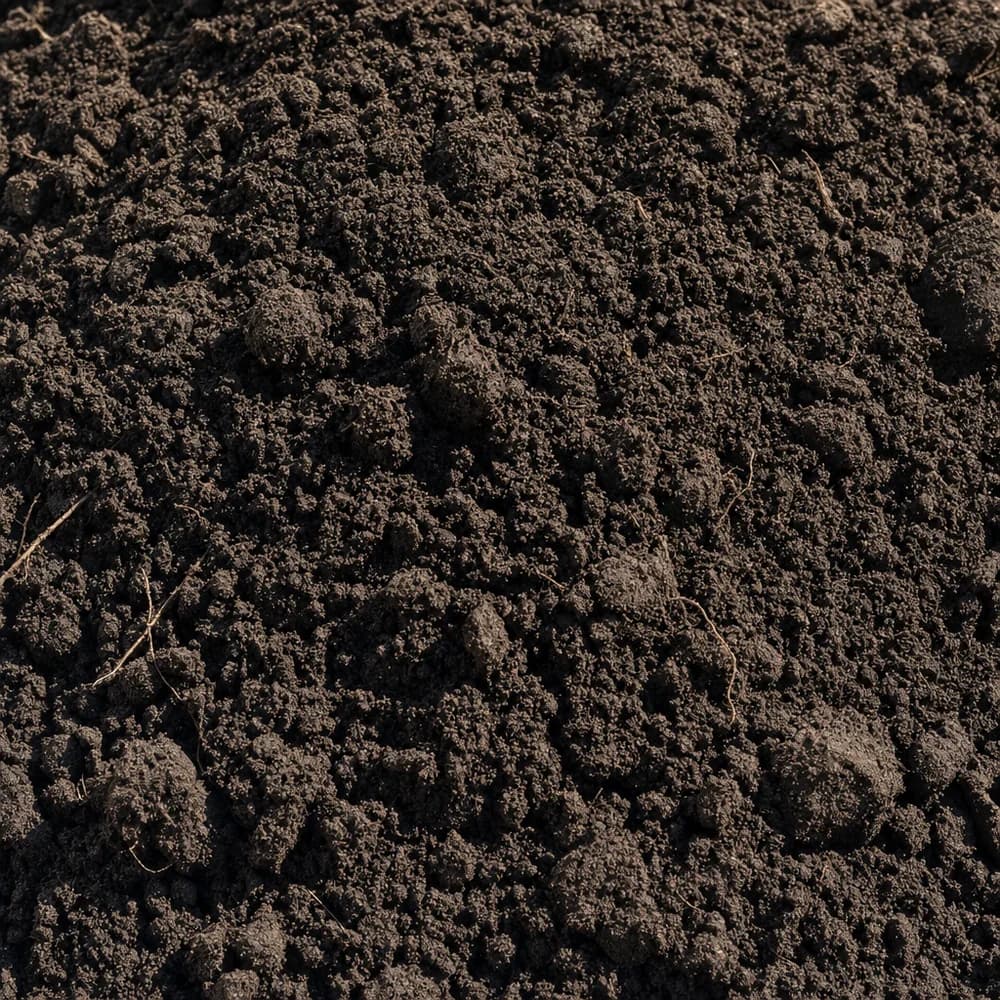
Push a shovel into a fill pile and it tells you what it is within a few seconds. It breaks into clods rather than crumbs, there is grit and coarse sand through it, and it has none of the dark, loose, sweet-smelling character of a planting blend. Screened to take out large rocks, roots and debris, and low in organic material by design, it is bought to make ground rather than to grow anything in. That single distinction settles most of the questions people arrive with.
Choose it when the job is elevation, not growth
Take it when the point of the work is the shape of the ground. Raising a low area that holds water, backfilling against a foundation or a wall, building a pad up to the level a slab or a base course will sit on, or filling a void left by a removed pool, tank or stump: all of those want a material that compacts firm and stays where it is put.
The low organic content is why. Organic material rots, and as it rots the volume goes with it, which is what causes a fill to slump a year or two after the job looked finished. A mineral fill has very little to lose, so a layer that has been placed in lifts and compacted properly holds the level it was set to.
Skip it for a foundation drain and for a culvert outlet
Two requests come through regularly where this is exactly the wrong material.
A French drain along a foundation is built to move water, and dirt does the opposite. Fill compacted against a foundation makes a firm shoulder, but the drainage line inside that trench has to be clean washed stone with a fabric wrap and a pipe, so water reaches an outlet rather than standing against the wall. Order Drain Rock for the trench itself and use fill only for the cap or the shoulder above it.
A culvert outlet or a ditch lining is the second. Moving water strips loose soil in a single winter storm, and a bare fill slope at an outlet becomes a scour hole and a load of silt downstream. That job needs stone sized to resist the flow, which is what RipRap is for, and rounded Large River Rock where the flow is slow and the result is meant to be seen.
Regrading the corner of a yard that ponds every January
The most common job is the yard that floods in the same spot every year. Across the valley floor and the flat southern basins, a year's rain arrives in a handful of storms, clay takes water slowly, and in parts of the Central Valley a cemented hardpan a few feet down stops it moving deeper. Water sits because there is nowhere for it to go, and the low corner is where it collects.
Filling that corner only works if the water then has somewhere to leave. Strip the turf and any soft, organic material first rather than burying it. Place the fill in lifts of six to eight inches, compacting each one before the next goes on, because a single deep dump of loose dirt will settle for years. Grade the finished surface so it falls continuously towards a drain, a swale or somewhere the water is allowed to go, then check that fall with a string line rather than by eye. A dead flat repair simply moves the puddle a few feet.
It builds the shape; something else finishes it
Fill is a structural layer, not a surface, and the distinction matters most where planting or paving follows.
If the area will be lawn or bed, bring the fill up to a few inches below the intended finished level and cap it with Top Soil, so roots have a layer worth growing in rather than a compacted mineral one. If the area will be a drive, a pad or paving, bring it up to the underside of the base course and cap with a compacted Class 2 Base. Either way, break the surface of the top lift before the capping layer goes on so the two knit together instead of meeting at a slick plane that water will run along.
A 25 by 18 low spot and a 40 foot strip, dry against wet
As an example, take a low area 25 by 18 feet, 450 square feet, averaging 8 inches deep once it is shaped. That is 450 x 0.667, or 300 cubic feet, and 300 divided by 27 is 11.1 cubic yards. This site publishes about 2,400 lb per cubic yard for dry fill dirt, or 1.2 tons per yard, which puts the order at 13.3 tons.
Now the part that catches people out. The same site publishes wet fill dirt at up to 3,000 lb per cubic yard, or 1.5 tons per yard. Material bought by weight after a wet spell delivers fewer cubic yards per ton, so the same hole could take closer to 16.7 tons. Order against the dry figure and check the ground before topping up, rather than the other way round.
A narrower job, a strip 40 feet long and 3 feet wide at 6 inches, is 120 square feet at 0.5 feet, which is 60 cubic feet, or 2.2 cubic yards, and about 2.7 tons dry. The dirt calculator holds the same figures if you want to test other depths.
Where a dirt load can sit on a tight lot
Fill takes up more room in a pile than people expect and it is the least forgiving material to store, because a soaked pile is heavy, sticky and slow to move. Choose a firm drop spot on hard ground rather than lawn, keep it off the line of a downspout, and have the area stripped and ready so the load can be spread rather than handled twice.
Quantity and a delivery date are both chosen here on the product page, and delivery is arranged at checkout using your ZIP code. The truck needs level, clear ground at the dump spot with nothing overhead. Where the work is behind a house and the only route in is a side gate, plan the wheelbarrow run before the date, and if access is genuinely tight, raise it through the contact page first.
Quickly Calculate How Much You Need
Material: Fill Dirt
How to Measure
Measure the length and width of your project area in feet
Decide on depth in inches (2" for landscaping, 4" for driveways)
Enter the values above and we'll calculate the tonnage you need
Need help figuring out the right amount? We can help!
Call or text us at (213) 566-1318 and we'll help you calculate the right quantity for your project.
Not sure how much you need? The Dirt Calculator has depth guides, coverage charts and worked examples for this material.
Frequently Asked Questions About Fill Dirt
Customer Reviews
Needed fill dirt for a low spot in my yard, and them showed up on the day they promised.
Diane E. · Long Beach, CA · Verified Buyer
Ordered fill dirt from them for a low spot in my yard and it was clean and consistent. The driver was friendly and really careful about where he dropped it. Super happy with how easy the whole thing was.
Chris I. · Sacramento, CA · Verified Buyer
Got fill dirt delivered by the team and everything showed up right when they said it would. They kept me updated the whole time, super easy and I'd definitely order again.
Angela E. · Long Beach, CA · Verified Buyer
Ordered fill dirt from them and the price was fair for the amount I got. Delivery was smooth, and I'd definitely use them again.
Hank F. · Sacramento, CA · Verified Buyer
Fill Dirt has 4 verified customer reviews with an average rating of 4.8 out of 5.
Fill Dirt delivery across California
- Los Angeles
- San Diego
- San Jose
- San Francisco
- Fresno
- Sacramento
- Long Beach
- Oakland
- Bakersfield
- Anaheim
- Stockton
- Riverside