Crusher Run for the Buried Layer Under a Pad, Drive or Patio
Below a California driveway or patio finish, Crusher Run forms a compacted layer that helps keep the surface supported in wet weather.
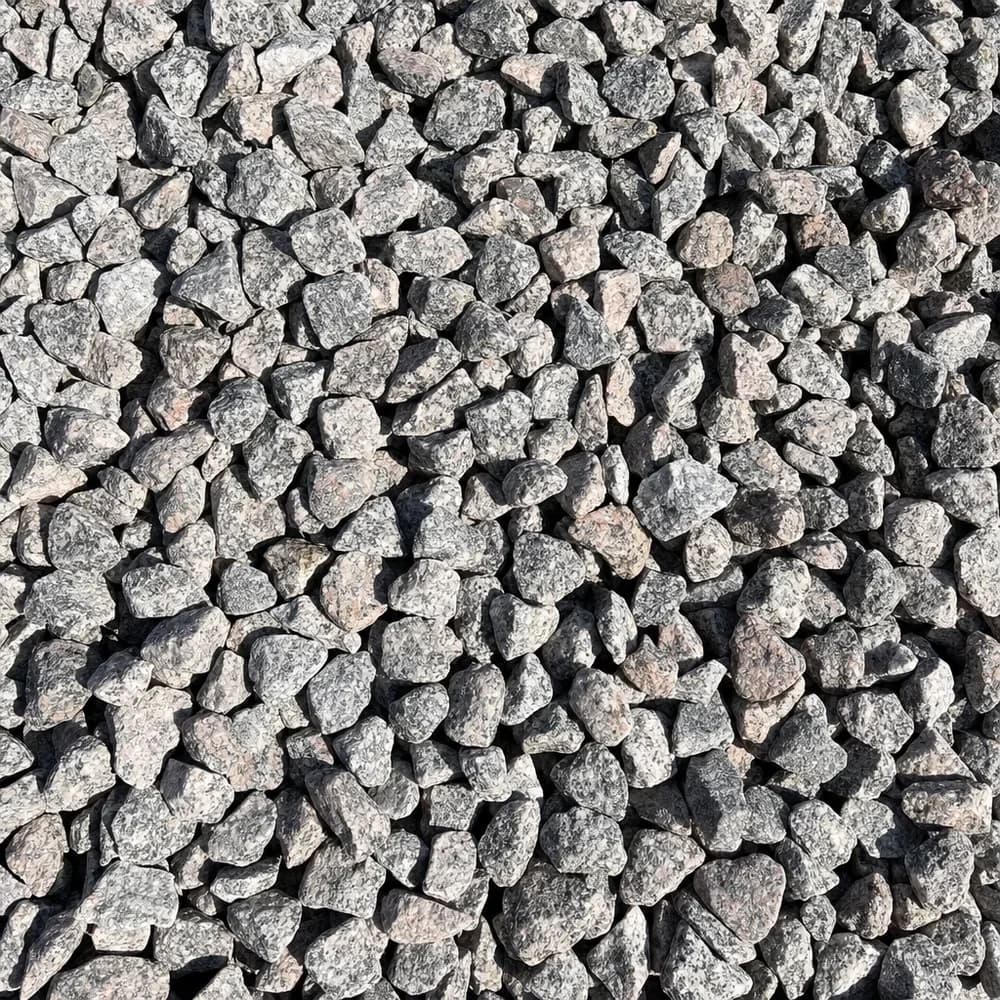
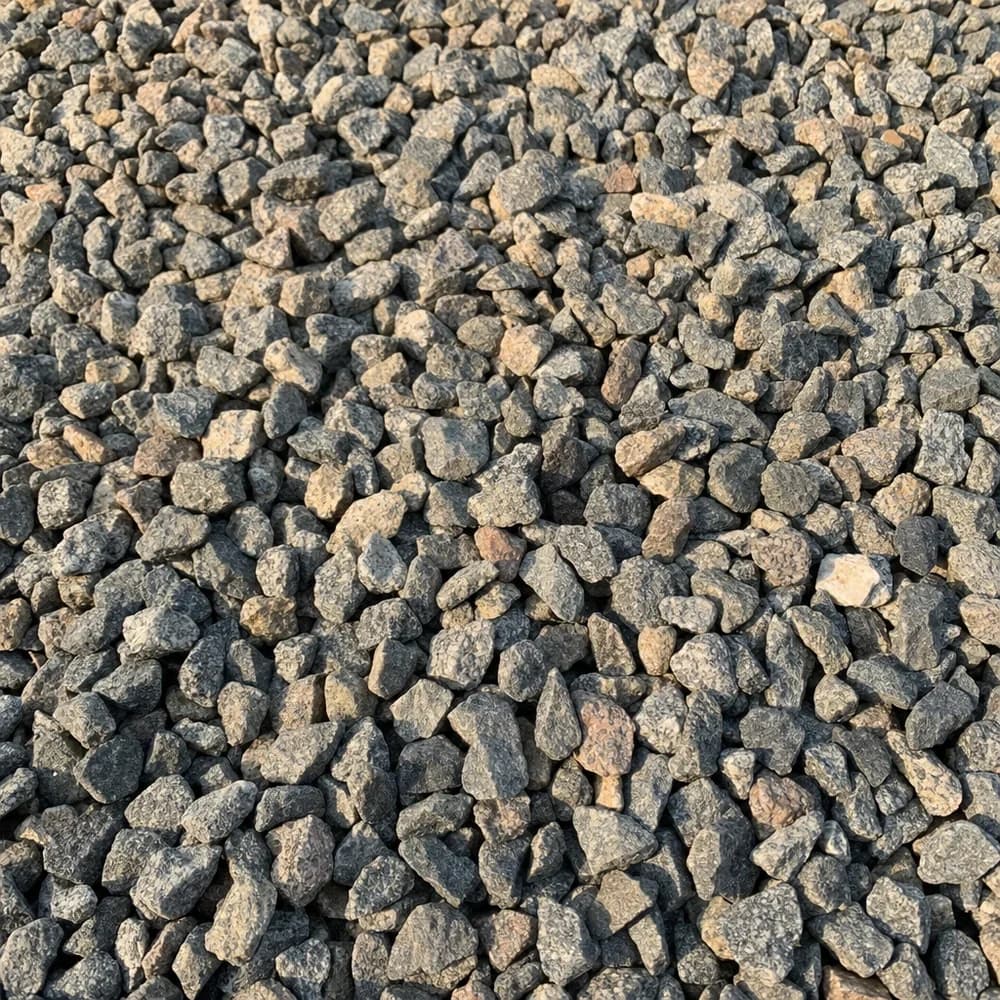
- Size: 3/4 inch minus
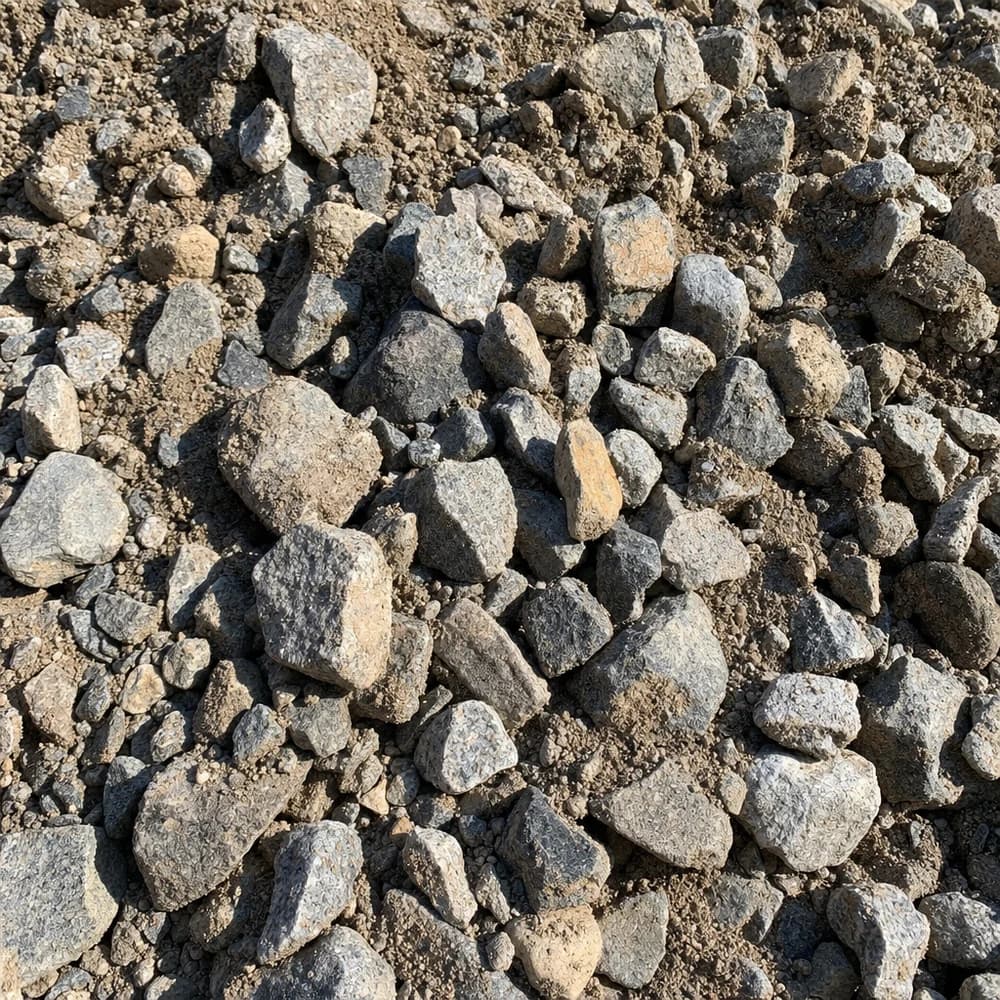
- Grading: Crushed stone blended with stone dust and fine particles
- Type: Angular crushed stone
From $437 for 1 ton, delivery included (larger loads cost significantly less per ton)
Free delivery included
Free delivery anywhere in California
Pick a delivery date
Weekday delivery, earliest Oct 29
“Ordered crusher run from the team and they kept me updated the whole time. Delivery showed up right on schedule, and I'm really happy with how it all went.”
Dave P. · Verified Buyer
Get a Free Quote
Fill out the form and our sales team will get back to you within the hour.
Size and Grading
- Size
- 3/4 inch minus
- Grading
- Crushed stone blended with stone dust and fine particles
- Type
- Angular crushed stone
A shed that has tilted a few degrees, a drive that rutted through January, a patio with one corner dropping away: on California ground those three failures usually begin in the same place, which is the compacted layer nobody ever looks at. Crusher run is what most people are buying when they set out to rebuild it. The reason that layer gets tested harder here than the annual rainfall totals suggest is that a large share of the year's water arrives in a handful of winter storms, and it lands on clay that swells or on hardpan that will not let it through.
What actually gives way under a pad after a wet winter
The surface is rarely the problem. A rutted drive or a rocking flagstone is the visible end of a layer below that has lost its shape, either because it was never dense to begin with or because water reached it and softened the ground it rests on. This material is built against that. It is a 3/4 inch minus product: angular crushed stone carried in a blend of stone dust and fine particles. The fines are not contamination. Rolled at the right moisture, the dust packs into the voids between the larger pieces and the course starts behaving as one mass rather than a bag of loose rock, so a wheel load spreads across it instead of punching into it.
Worth knowing before you order: most buyers here ask for Class 2 Base by name for the same kind of work, because that is the vocabulary Caltrans uses and the vocabulary a local contractor or building department will reach for. The two are close relatives, both graded with binding fines. Crusher run is the name that travels with the 3/4 inch minus product on this page.
Clay, hardpan and a foothill cut: how crusher run behaves on each
On the shrink-swell clay that runs through the Coast Range valleys and many Southern California basins, the ground beneath the base moves on its own schedule. It swells when the storms wet it and cracks open through the long dry months. A thin, loosely placed course over that clay passes every bit of that movement straight to the surface. A thicker section, built in lifts, spreads the load far enough that the movement shows up as a slow sag rather than a rut.
On the cemented hardpan sitting a few feet down across parts of the Central Valley, the problem inverts. The subgrade is firm enough, but water cannot get past it, so anything draining down stops there and stays. A crushed base holds up on hardpan provided the finished surface sheds water sideways rather than ponding on it.
On the foothill lots where weathered granite makes up the native ground, the subgrade is already coarse and fast-draining, and those sites usually need less section. What they do need is a route for the runoff coming off the slope above, one that never crosses the pad.
Getting it down in the dry season, in lifts, with water in it
The window for this work runs from late spring into fall, and in most of the state it is the storms rather than the cold that close it. Strip vegetation and soft topsoil first, since organic material under a base acts as a sponge. Shape the subgrade to the fall you want at the finished surface, then place the material in lifts of a few inches instead of one deep dump. Dampen each lift. Not soaked, just wet enough that a squeezed handful holds together, because the fines only migrate into the voids when there is some moisture to carry them. Roll or plate-compact each lift before the next goes on. Going straight to full depth is the commonest reason a new pad settles in its first winter: the bottom of the layer never received any compactive effort at all.
A rock garden bed and a downspout splash area want something else
Two jobs come up often enough to name. The first is a xeriscape or rock garden bed, as an example where a lawn has come out and stone is going in as ground cover. This is the wrong material for that. It packs down to a dense gray surface, water sheds off it instead of reaching the plants, and it reads as a job site rather than a planting. River Cobble or Pea Gravel is what that bed is asking for.
The second is the splash area below a downspout. Water landing there needs to leave quickly, and a compacting, fines-carrying material does the opposite. It tightens up, then pushes the flow towards whatever sits next to it, often a foundation wall. Open stone belongs under a downspout: 3/4" Drain Rock or #67 Stone.
Dust in August, washboard by March: what upkeep looks like
A compacted surface left exposed lifts fines as dust through a long dry summer, and the first real storm carries more of them into the gutter. That slow loss of fine material is what eventually lets a surface go loose underfoot. Ruts and washboarding come from a different cause: water running along the length of a drive rather than off the side of it, and traffic braking or turning in the same two square yards week after week. Crown or cross-slope the surface so storm water leaves sideways, stop the edges from spreading, and drag a developing washboard out early while there is still enough fine material left to re-knit once it is dampened and rolled.
Sizing a 12 by 16 shed pad and the approach to a garage
Take a garden shed pad as an example, 12 feet by 16 feet, with 4 inches of compacted material under it. That is 192 square feet. Four inches is a third of a foot, so 192 divided by 3 gives 64 cubic feet, and 64 divided by 27 is 2.4 cubic yards. The crusher run calculator adds 10 percent by default for spillage, which brings it near 2.6 cubic yards.
If the approach to a garage is being rebuilt in the same visit, say 40 feet by 11 feet at 5 inches, that is 440 square feet. Five inches is 0.4167 of a foot, so 440 multiplied by 0.4167 comes to 183 cubic feet, which is 6.8 cubic yards, or about 7.5 with the allowance added.
Orders are placed by the ton rather than by volume, and the crusher run calculator converts those yardages using the density held for this material. Treat the arithmetic above as the check that tells you when a figure has come out an order of magnitude wrong. This site publishes about 3,000 lb per cubic yard for crusher run, roughly 1.5 tons per yard, so the 2.4 yard shed pad is approximately 3.6 tons and the 6.8 yard approach about 10.2.
Choosing a date and clearing a drop point
Quantity and delivery date are both set on this page, and delivery is arranged at checkout from your ZIP code. The part worth settling in advance is the drop. The truck needs clear access and a firm, level place to tip, with nothing overhead, and a heap of damp fines parked at the bottom of a slope is a genuinely miserable thing to wheelbarrow uphill. Pick the spot before you order, and if the access to your lot is narrow or steep, raise it through the contact page first rather than on the morning.
Quickly Calculate How Much You Need
Material: Crusher Run
How to Measure
Measure the length and width of your project area in feet
Decide on depth in inches (2" for landscaping, 4" for driveways)
Enter the values above and we'll calculate the tonnage you need
Need help figuring out the right amount? We can help!
Call or text us at (213) 566-1318 and we'll help you calculate the right quantity for your project.
Not sure how much you need? The Crusher Run Calculator has depth guides, coverage charts and worked examples for this material.
Frequently Asked Questions About Crusher Run
Customer Reviews
Went with them for crusher run and it was spot on. Delivery was easy, and the driver dropped it right where I needed it. I'd definitely order from them again.
Steve K. · Los Angeles, CA · Verified Buyer
Grabbed crusher run from the team, ordering was quick and I'd definitely order again and recommend them.
Diane F. · San Diego, CA · Verified Buyer
Had crusher run delivered by California Rock Supply and everything went smooth. The driver was friendly and careful about where he placed it, which saved me a lot of extra work. I'd definitely order again and recommend them.
Jeff T. · San Jose, CA · Verified Buyer
Ordered crusher run from the team and they kept me updated the whole time. Delivery showed up right on schedule, and I'm really happy with how it all went.
Dave P. · Sacramento, CA · Verified Buyer
Crusher Run has 4 verified customer reviews with an average rating of 5 out of 5.
Crusher Run delivery across California
- Los Angeles
- San Diego
- San Jose
- San Francisco
- Fresno
- Sacramento
- Long Beach
- Oakland
- Bakersfield
- Anaheim
- Stockton
- Riverside