Walkway Gravel for Garden Paths and Side Yard Walks
Walkway Gravel gives California garden paths a firm, natural-looking surface that lets water pass through during wet weather.
- Size: 3/8 inch
- Grading: Graded mix of stone sizes
- Type: Crushed stone
From $454 for 1 ton, delivery included (larger loads cost significantly less per ton)
Free delivery included
Free delivery anywhere in California
Pick a delivery date
Weekday delivery, earliest Oct 29
“Had walkway gravel delivered by these guys and I'm really happy with how it turned out, especially with the free delivery.”
Jennifer R. · Verified Buyer
Get a Free Quote
Fill out the form and our sales team will get back to you within the hour.
Size and Grading
- Size
- 3/8 inch
- Grading
- Graded mix of stone sizes
- Type
- Crushed stone
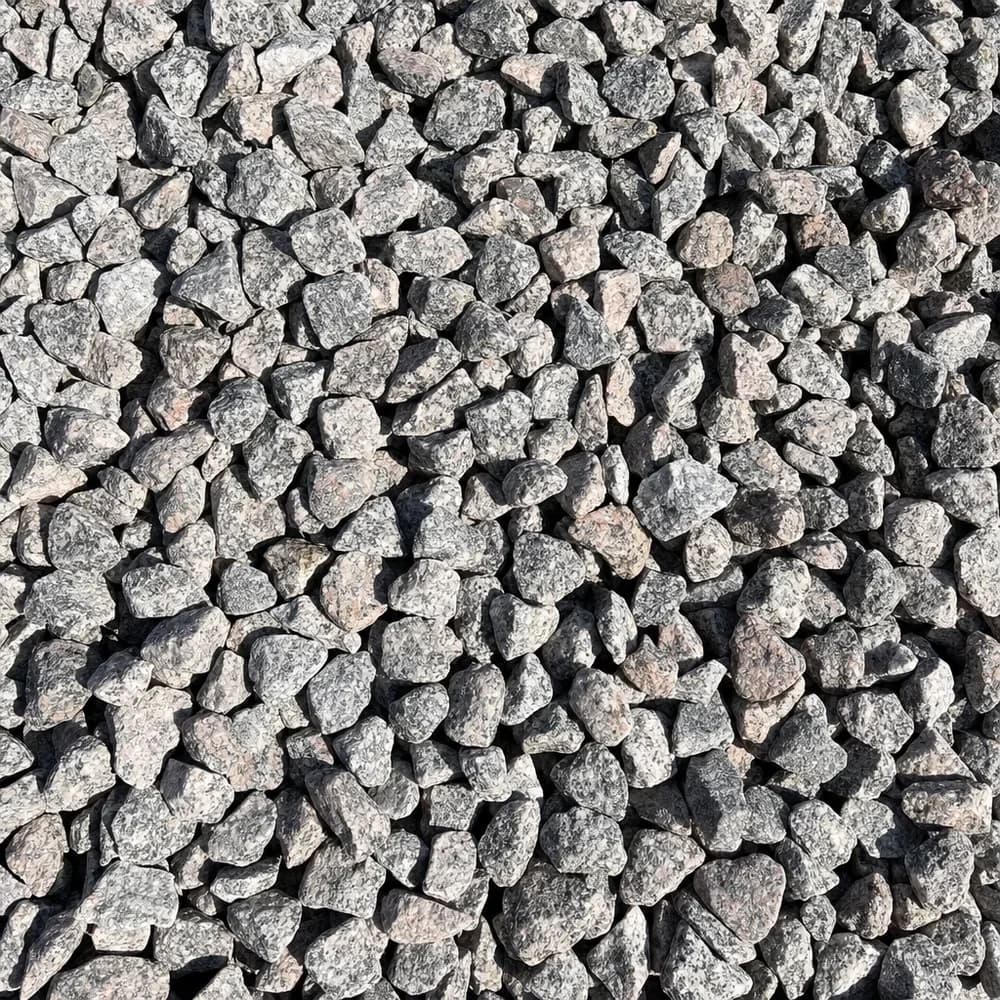
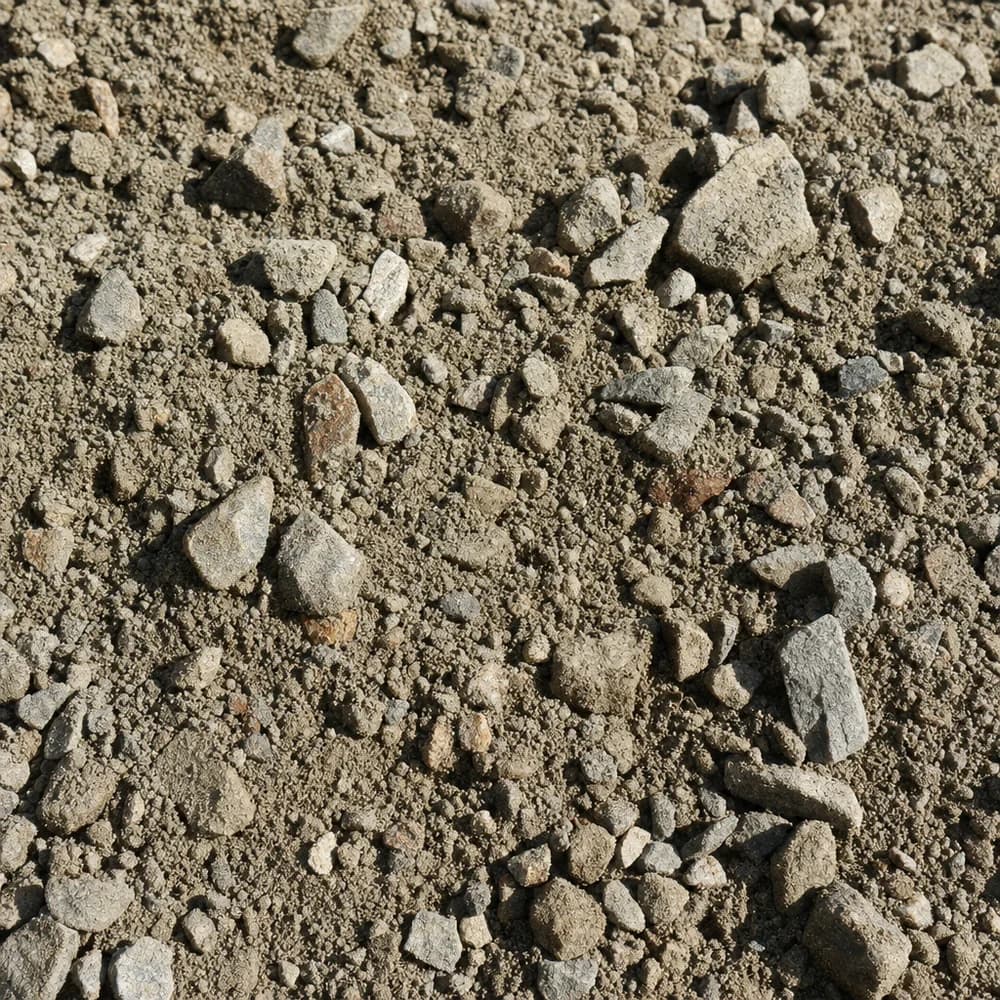
Push a hand into the pile and the thing you notice about walkway gravel is that it does not bite. The pieces top out around 3/8 inch, crushed and angular, but small enough that the corners press rather than cut, and beneath them sit smaller sizes and some dust that will end up filling the gaps. Tip a scoop out on the drive and it spreads into a low, even heap instead of rolling away. That behavior in the hand is a fair preview of how the path will feel underfoot after a summer of use in a California garden.
Walkway gravel on the back-door path, and the lawn it replaces
The job this material goes into most often here is a route through a garden that used to be lawn. A strip of turf between the back door and a shed, a side yard nobody walks on in bare grass anyway, a curve between planting beds that is currently a worn line in the grass. All of those want a surface that drains, tolerates a hose, carries a wheelbarrow and does not demand a concrete pour.
A graded 3/8 inch mix suits that better than a single-sized stone does. The range of sizes lets the material settle together rather than staying loose, so it takes a footstep without the crunching slide that larger stone gives, and a garden cart rolls across it instead of plowing through it. The stone color sits quietly next to planting, which matters when the path is the thing running between everything else in the yard.
How a 3/8 inch path behaves through a California winter
Most of the year the answer is that it behaves well and you forget about it. The wet months are the test. Rain arrives in a few large storms, and on the heavy clay of the Coast Range valleys and the inland basins the ground underneath a path holds that water at the surface. Water passes down through the gravel readily enough; the question is what it meets below. A path over clay with nowhere to shed will hold a soft spot for days after a storm and start to pump fine soil up into the stone.
Two things fix that and both happen before the gravel goes down. Give the path a slight fall to one side so surface water leaves rather than sitting on it, and put a layer between the gravel and the native ground so the two never mix. On sandy coastal or desert ground the first concern disappears and the second stays, because loose sand migrates up into a thin stone layer just as readily as clay does.
Dust is the dry-season counterpart. A path used daily through a long rainless summer will give up some of its fines, and a stiff broom moves a surprising amount of material off a path and into the beds beside it. Sweep back towards the path rather than away from it.
Fabric, edge and a compacted layer under the gravel
The usual build is three parts. Excavate to a consistent depth and firm the bottom, since a path laid on loose fill settles in waves. Lay landscape fabric across the excavation to keep soil out of the stone and weeds out of the path. Then place a compacted layer of Class 2 Base if the ground is soft or the path will take a cart regularly, with the walkway gravel spread and tamped on top of it.
The edge matters more than people expect. A path without one spreads outwards a little each season until it is twice its intended width and half its intended depth. Steel edging, a timber header, a set brick course or a row of heavier stone all work; what does not work is a bare soil shoulder. On a sloping run, step the path into short level sections with a small riser between them rather than laying one continuous ramp, because a continuous slope turns into a channel in the first real storm.
Not for a rural lane, and not for prepping a new lawn
Two requests turn up often and neither belongs here. The first is a long rural lane, taking one as an example. A 3/8 inch path mix is too fine to hold up under vehicle tires; it pushes out from under a wheel and washes off a lane in a storm. That build wants a compacted base with Driveway Gravel over it.
The second is new lawn preparation. Gravel of any size does nothing useful under turf. Grass needs depth of soil it can root into and something that holds moisture through the dry season, which is the opposite of what this material does. Top Soil over a properly broken-up subgrade is the answer there, with Shredded Mulch reserved for the beds around it.
Weighed against decomposed granite and pea gravel
The two materials most people are choosing between when they land here are this one and Decomposed Granite. The DG is 1/4 inch minus, mostly stone dust with fine particles, and once it is watered and compacted it sets up into a firm, almost solid surface that a wheelchair or a garden cart crosses easily. It is the smoother, more formal-looking finish. The trade is that it tracks indoors on wet shoes, it wants topping up as it wears, and it holds a puddle if the fall is wrong. Walkway gravel stays a stone surface: looser underfoot, more forgiving about drainage, less likely to follow you into the house.
Pea gravel is the third option and the one to be careful about. It is rounded, so it never locks together. On a path it shifts under every step and migrates towards the edges, which is charming in a seating area and tiring along a route you walk twice a day. Save Pea Gravel for the places where people stand rather than walk.
Working out a 55 foot path and a seating nook
Take a garden path as an example, 55 feet long and 3 feet wide, laid 2 inches deep over a prepared base. That is 165 square feet. Two inches is 0.1667 of a foot, so 165 multiplied by 0.1667 comes to 27.5 cubic feet, and 27.5 divided by 27 is just over 1 cubic yard.
Add a small seating nook at the end of it, 9 feet by 7 feet, at the same depth. That is 63 square feet, which works out at 10.5 cubic feet, or 0.4 of a cubic yard. The pair together come to about 1.4 cubic yards, or 1.5 with the 5 percent the stone calculator adds by default.
Orders are in tons, so let the stone calculator convert those yardages with the density it holds for this material. The figures above are there to tell you whether the answer it gives is in the right neighborhood. This site publishes about 2,800 lb per cubic yard for walkway gravel, roughly 1.4 tons per yard, so 1.4 cubic yards is approximately 2 tons, which is the sensible order here.
A small load, a date and somewhere to put it
Quantity and delivery date are both set on this page, and delivery is arranged at checkout by ZIP code. Path jobs are usually small loads, which makes the drop point the main decision rather than an afterthought. Pick somewhere firm and level with clear headroom, close to the path and ideally on a hard surface, because a small stone raked off a lawn takes longer than laying the path did. A tarp under the heap saves the last few wheelbarrow loads. Have a look at the full product list before you check out if base or edging material is going in on the same visit.
Quickly Calculate How Much You Need
Material: Walkway Gravel
How to Measure
Measure the length and width of your project area in feet
Decide on depth in inches (2" for landscaping, 4" for driveways)
Enter the values above and we'll calculate the tonnage you need
Need help figuring out the right amount? We can help!
Call or text us at (213) 566-1318 and we'll help you calculate the right quantity for your project.
Not sure how much you need? The Gravel Calculator has depth guides, coverage charts and worked examples for this material.
Frequently Asked Questions About Walkway Gravel
Customer Reviews
Decided on walkway gravel from California Rock Supply and it showed up right when I needed it. I was really happy with how easy it was, especially with the free delivery.
Tara S. · Long Beach, CA · Verified Buyer
Ordered walkway gravel from the team and was really happy the delivery was free. The driver was friendly and careful about placement, which made the whole thing super easy.
Gina V. · Los Angeles, CA · Verified Buyer
Went with this company for walkway gravel and I'm really happy with how it turned out. Free delivery was a nice bonus, and everything showed up right when I needed it.
Diane R. · San Jose, CA · Verified Buyer
Had walkway gravel delivered by these guys and I'm really happy with how it turned out, especially with the free delivery.
Jennifer R. · Sacramento, CA · Verified Buyer
Walkway Gravel has 4 verified customer reviews with an average rating of 5 out of 5.
Walkway Gravel delivery across California
- Los Angeles
- San Diego
- San Jose
- San Francisco
- Fresno
- Sacramento
- Long Beach
- Oakland
- Bakersfield
- Anaheim
- Stockton
- Riverside