Topsoil Calculator for Lawns Over Clay and Hardpan
Enter your project dimensions
Spreading four inches of good soil over ground that will not take water is the most expensive way to build a puddle. Across the Coast Range valleys and the inland basins, the clay underneath swells in the wet season and cracks in the dry one; through parts of the Central Valley a cemented hardpan a few feet down stops water sinking at all. So the depth you type into this topsoil calculator is only half the job, and the other half, loosening what is already there and giving water somewhere to go, happens before the truck arrives. Here is a full job worked through, then the mechanics behind it.
Eight yards to take a side yard away from the house
A side yard 38 feet by 17 feet is 646 square feet. It sits nearly level and sheds roof water back toward the wall, so the plan is to strip the old turf, rip the surface an inch or two, and lay 4 inches of screened topsoil graded to fall away from the building.
The volume: 646 x 4 / 12 = 215.3 cubic feet. Divided by 27, that is 8.0 cubic yards. At 1.10 tons a yard, roughly 8.8 tons on the truck. Aim the finished surface to drop about 6 inches across the first 10 feet out from the wall, which uses a little more soil at the house end and a little less at the far edge than a flat 4 inches would.
The same garden's back lawn, 1,300 square feet of established grass, is getting a half-inch topdressing at the same time: 1,300 x 0.5 / 12 = 54.2 cubic feet, which is 2.01 cubic yards and about 2.2 tons. Two very different-looking jobs, and the thin one over twice the area needs about a quarter of the soil. Depth, not area, is what writes the order. This is a worked illustration rather than a real project.
Feet, inches and five areas in the topsoil calculator
Rectangle takes a length and width in feet. Circle takes a diameter, which handles a round bed or a tree well without squaring it off. Multiple areas totals up to five pieces, so a front strip, a side yard and a patch by the gate can be entered together, provided they are all going down at the same depth. The half-inch topdressing above had to be a separate run for exactly that reason.
Depth is in inches and accepts 0.25 to 24, which is what makes a quarter-inch topdressing possible on the same tool as a 6-inch bed. Choose the material, decide whether to leave the option that adds 5 percent for compaction and spillage ticked, and the answer returns as cubic yards, tons and cubic feet at once, with a button to email the figures.
Depths worth knowing before you type one: a quarter to half an inch for topdressing an established lawn, half an inch to an inch before overseeding, 4 to 6 inches over loosened subgrade for a new seeded or sod lawn, and about 6 inches for a flower bed blended into the native soil beneath. Raised vegetable beds are a different material; use the bed soil tool for those.
A yard covers 81 square feet at four inches
Screened topsoil is bought by the cubic yard here, and the yard is a more useful unit than it first looks. One yard spread 4 inches deep covers 81 square feet, at 3 inches 108, at 6 inches 54, and as a half-inch topdressing it stretches over 648 square feet. Five yards will topdress most of a suburban back lawn or lay a new one across about 400 square feet.
The tonnage beside it, based on about 2,200 lb per cubic yard or 1.10 tons, describes the load rather than the order. It matters for two reasons: what the driveway is being asked to carry, and how much of it you can realistically move in a day. A pile that has been rained on weighs noticeably more per shovel and smears instead of raking, which is the argument for booking delivery in the week you intend to spread rather than two weeks ahead in the wet season.
Low corners, gate lines and the half inch that vanishes
The 5 percent option covers spillage and the material that disappears into loosened ground. What it does not cover is the low corner nobody measured, the strip by the gate that always ends up thin, or the settlement that follows a first proper soaking. Rounding the area up to the next foot in each direction is the more reliable margin, and on a new lawn it is better to finish half an inch high than to run out at the far edge with the seed already ordered.
Press the soil firm without stamping it. In a properly settled layer a footprint sinks about half an inch, and anything much softer will keep dropping after the grass is in.
Screened topsoil above, fill dirt below, blended soil in the beds
Screened topsoil is natural surface soil with stones, roots and clods sifted out, which is why it rakes out with less work than site soil. It is the material for lawns, for finish grading and for the top of a bed, and it is not the material for raising a grade by a foot. Where the ground has to come up, put Fill Dirt in for the bulk of the lift, sized with the fill dirt tool, and keep Top Soil for the upper 4 to 6 inches where roots actually live. For planting beds and planters, a compost blend is the better material and Garden Soil is where that sits.
On an established lawn, half an inch is the ceiling for a single topdressing. Raising a lawn by more than about an inch means dealing with the existing turf first, because sod buried under new soil rots unevenly and leaves the surface lumpy for a season.
Judging a load when it lands on the drive
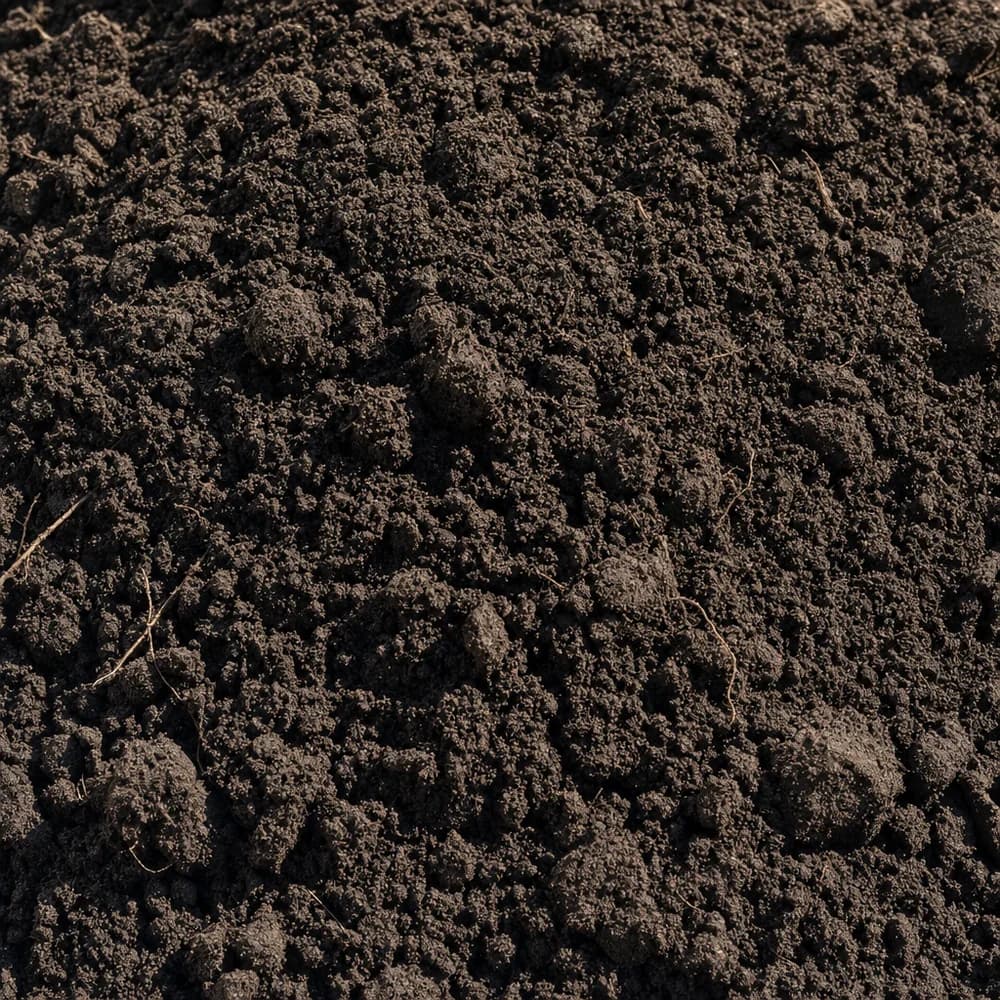
Good screened topsoil looks dark, feels crumbly and smells earthy rather than sour. Squeeze a moist handful into a ball and poke it: it should fall apart. If it slides into a slick ribbon there is a lot of clay in it, and if it will not hold together at all it is largely sand. Gray color or a sour smell suggests it has been stored wet and airless, and visible white rhizomes are a weed problem waiting to start. Photograph anything that looks unusual before it gets spread.
Before the truck arrives, pick a firm, flat drop point on a tarp, close to the work and clear of low branches. Delivery is arranged at checkout by ZIP code, and the quantity and date are chosen on the product page once the calculator has given you a yardage.
Common questions
The 9-foot bed cut into the lawn is going in at 6 inches. Which shape handles it?
Use Circle and enter its diameter in feet. A 9-foot bed is 63.6 square feet, so 6 inches of soil comes to 31.8 cubic feet, which is 1.18 cubic yards and about 1.3 tons.
How many yards does 1,000 square feet of new lawn take at 4 inches?
Multiply the area by the depth in inches, divide by 12 for cubic feet, then divide by 27. An easier version for lawn work: at 4 inches, every 81 square feet takes a yard, so 1,000 square feet takes a little over 12.
The same 8 yards as fill dirt rather than screened topsoil - why does the load weigh more?
Each material carries its own weight. Screened topsoil is about 2,200 lb a cubic yard, blended garden soil nearer 2,000 and fill dirt about 2,400, so an identical 8 yards can land anywhere between 8 and 9.6 tons depending on what is in the truck.
Does 5 percent cover a lawn area that has just been ripped up?
Not really. Freshly loosened ground swallows more than a smooth surface does, so round the area up, order in whole yards and keep a little back for the low spots that appear after the first watering.
On a falling lawn, does the tape lie on the ground or stay level?
Measure along the ground, following the fall. Soil covers the real surface, not its shadow on a plan, and on a noticeable slope the top of the run will also want slightly less depth than the bottom.
Related calculators
Lawn math done? Soil's on us to deliver.
Screened topsoil by the cubic yard, free delivery across California.