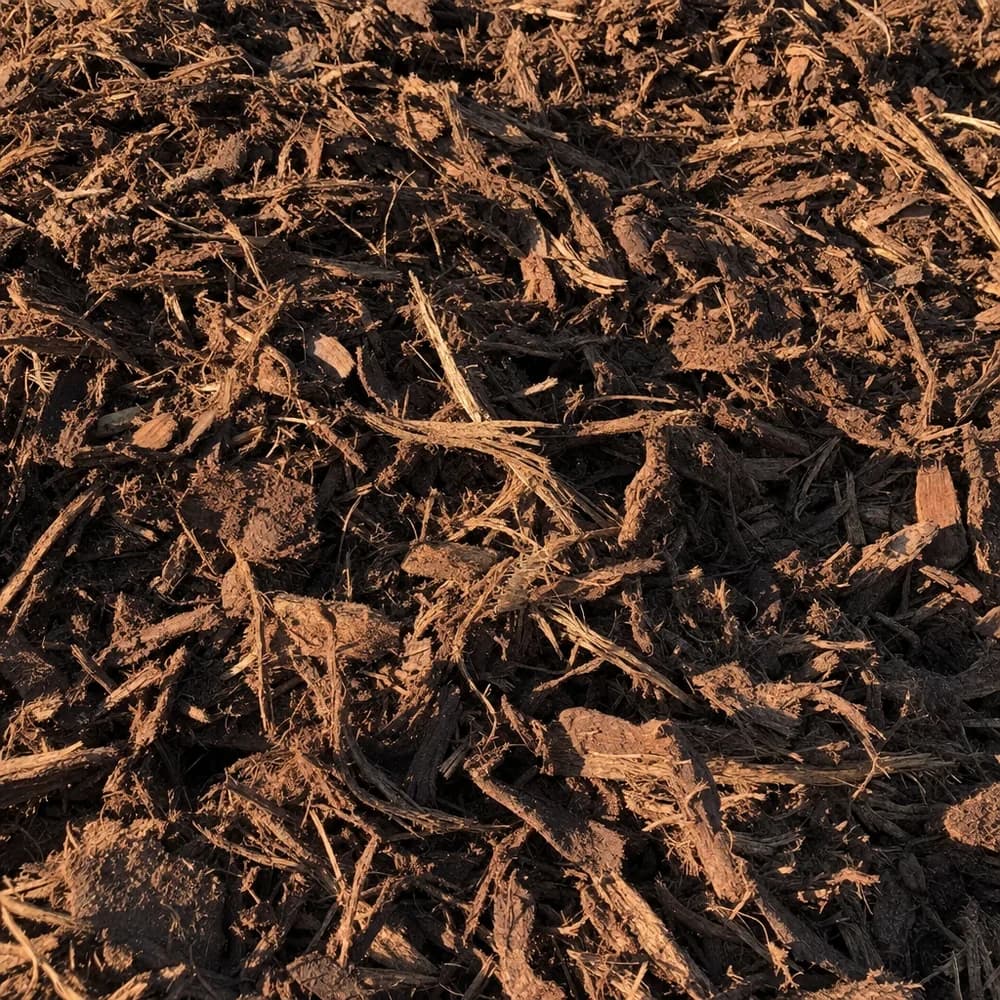
Mulch Calculator for Planting Beds and Tree Rings
Enter your project dimensions
Bark goes down in California for a reason that has nothing to do with tidiness. The soil holds water for a few weeks after the winter storms and then gets no more for five or six months, and a cover over that soil is what decides how much of it is still there in July. Which is why most people reach for a mulch calculator in late winter or early spring, once the beds are damp and before the heat arrives, rather than in the middle of a dry autumn when there is nothing left underneath to keep.
Curved borders, tree rings and the diameter box
Beds are rarely rectangles. The practical approach is to break a curved border into straight-sided chunks that roughly match it, measure each one in feet, and accept that a bed which bulges in the middle and pinches at the ends averages out fairly well. Round bed? Measure across the widest point and use the diameter.
Tree rings are the clearest case for the circle shape. A ring 4.5 feet across is 15.9 square feet, and three of them together are 47.7 square feet, which is a genuinely small order once you see it in yards rather than in trips to the car.
What the mulch calculator wants from five beds at once
Rectangle takes a length and a width in feet, Circle takes a diameter, and Multiple areas totals up to five pieces in a single calculation. Five is usually enough for a whole front garden: the strip along the house, two island beds, a border down the fence and the tree rings grouped as one entry.
Depth goes in as inches, from 0.25 to 24, though nothing about mulch should take you past 4. Choose the material, decide on the option that adds 5 percent for compaction and spillage, and the result comes back as cubic yards, tons and cubic feet. The email button puts the figures in writing so you can check them against the bed list before ordering.
Thirteen and a half bags to the yard
Twenty-seven cubic feet make a cubic yard, and a standard garden-center bag holds 2 cubic feet, so one yard is exactly 13.5 bags. That conversion is the one worth carrying around, because it turns an abstract yard into something you can picture stacked in a boot.
Shredded mulch is published here at roughly 600 lb per cubic yard, which is 0.30 tons. That is a fifth of what the same cube of crusher run weighs. It also explains why mulch is sold and ordered by volume rather than weight: a load is limited by the space it takes up, not by what it puts on the axle. Take the cubic yards figure from the result and leave the tonnage alone.
| Depth | 1 cubic yard covers | 10 bags of 2 cu ft cover |
|---|---|---|
| 1 inch | 324 sq ft | 240 sq ft |
| 2 inches | 162 sq ft | 120 sq ft |
| 3 inches | 108 sq ft | 80 sq ft |
| 4 inches | 81 sq ft | 60 sq ft |
Two inches over last year's bark, three on bare ground
Renewing a bed that still has an inch or two of old material on it takes 2 inches, after you have gone through the old layer with a rake to break up the surface. Bare soil takes 3 inches, which is the depth that keeps weed seeds dark and holds moisture into the summer. Nothing takes more than 4. A deep wet layer shuts air out of the root zone, which is a slower and less obvious way to lose a shrub than forgetting to water it.
Play areas are the exception in the other direction, at 6 inches or more of certified playground chips rather than landscape mulch.
Three beds worth of arithmetic
These are illustrations, not jobs anyone has placed.
A foundation bed 42 feet long and 3 feet deep, on bare soil at 3 inches: 126 square feet, then 126 x 3 / 12 = 31.5 cubic feet, which is 31.5 / 27 = 1.17 cubic yards, or about 16 bags. Its weight is roughly 0.35 tons, a figure you will never need.
Three tree rings 4.5 feet across at 3 inches: 47.7 square feet total, then 47.7 x 3 / 12 = 11.9 cubic feet, which is 0.44 cubic yards or about 6 bags.
An annual refresh across 560 square feet of established beds at 2 inches: 560 x 2 / 12 = 93.3 cubic feet, or 3.46 cubic yards, which would be 47 bags.
A ring of bare soil at the base of the trunk
The mistake that costs something is piling mulch against bark. Keep it 3 to 6 inches clear of the trunk and leave an exposed ring of soil there, so the shape is a low donut rather than a cone. Bark that stays damp under a mound rots, and rodents use the cover. The same clearance thinking applies at the house: keep mulch 6 inches below the siding line and hold it to 2 or 3 inches in the beds nearest the wall.
Rounding up, and where a three-yard pile goes
Round to the next half yard rather than shaving it close. Beds swallow more than they look like they will, and the material left over goes to the strip behind the garage that never gets measured. Spread it within a week or two: a large pile that sits for a month builds heat inside and turns sour.
A three-yard load makes a heap about the footprint of a small car, so pick a firm spot with room around it, put a tarp down first, and keep it off fresh concrete, which stains. Delivery is arranged at checkout by ZIP, and the truck needs clear access to wherever that heap is going.
Bark on top, growing soil below
Mulch is a cover, not a growing medium, and it is not the layer plants root into. If the bed is being built or rebuilt rather than refreshed, size the soil first with the garden soil tool against Garden Soil, or the topsoil tool where the grade has to come up, put the mulch over the finished planting, then order Shredded Mulch by the yard.
For a bed that is never going to be replanted, a stone mulch instead of bark sizes the same beds at four times the weight per yard. Booking a bulk drop covers access and the spot the heap goes, and every material tool on the site handles the soil, gravel and base quantities for the rest of the garden.
Common questions
Can the bark heap sit on the lawn while I work through the beds?
Somewhere flat, firm and close to the beds, with a tarp underneath and space to swing a wheelbarrow around. Avoid fresh concrete and avoid the lawn, since a heap left standing will mark the grass under it within a couple of weeks.
At roughly 600 lb a yard, is the tons line any use when I place a bark order?
Not for ordering. Mulch is sold by the cubic yard, and at roughly 600 lb a yard the weight is small enough that volume is always the limit. The tons figure is useful only if you are comparing a mulch quantity against a stone or soil layer on the same job.
I already have old bark in the bed. Do I measure from the soil or from the top of it?
From the top of what is there. Rake the old layer loose, work out what it would take to bring the total to 2 or 3 inches, and enter that. If the old material is matted or showing fungal growth, take it out and start from soil.
The ring under the specimen tree is 8 feet across. Which shape takes that measurement?
Use the circle shape and enter the diameter across the widest point. An 8 foot ring is 50.3 square feet, so at 3 inches it is 12.6 cubic feet, which is 0.47 cubic yards or about 6 bags.
What is the pencil sum that turns a bed's square footage into bags?
Multiply the bed area in square feet by the depth in inches, divide by 12, then divide by 27. Two hundred square feet at 3 inches gives 50 cubic feet, which is 1.85 cubic yards, or 25 bags at 13.5 bags a yard.
Related calculators
Skip the 27-bag cart.
Bulk shredded hardwood by the yard, tipped in your driveway, delivery free.