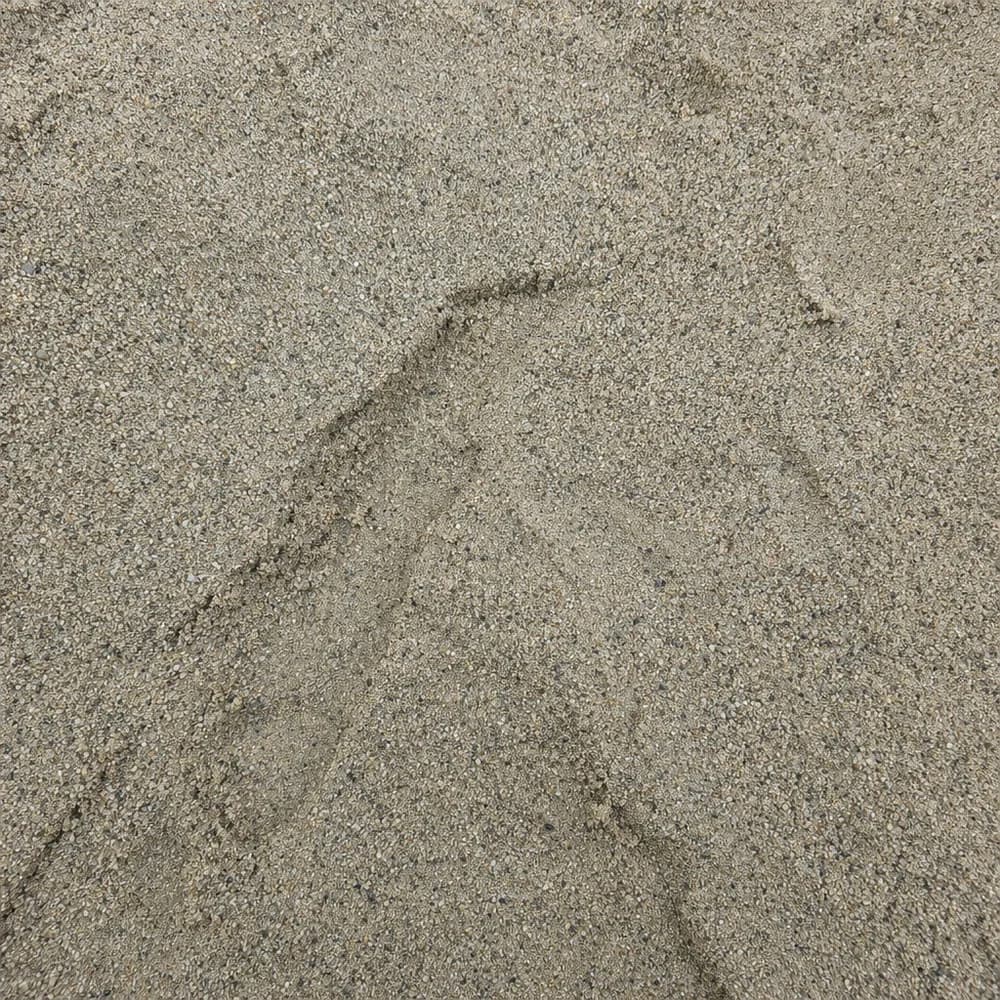
Mason Sand for Paver Bedding, Mortar and Play Surfaces
When wet-season drainage planning leaves paver finish work to do, California buyers can use Mason Sand for smooth bedding, mortar, and play surfaces.
- Size: Ultra-fine, consistent grain size
- Grading: Washed to remove clay, silt and organic impurities
From $530 for 1 ton, delivery included (larger loads cost significantly less per ton)
Free delivery included
Free delivery anywhere in California
Pick a delivery date
Weekday delivery, earliest Oct 29
“Went with them for mason sand and it showed up right when I needed it. The free delivery was a nice bonus, and the driver was super friendly and careful about where he placed it. Really happy with the whole thing and I'd use them again.”
Stephanie D. · Verified Buyer
Get a Free Quote
Fill out the form and our sales team will get back to you within the hour.
Size and Grading
- Size
- Ultra-fine, consistent grain size
- Grading
- Washed to remove clay, silt and organic impurities
The ground under most patio work in this state changes size with the calendar. Expansive clay across the Coast Range valleys, the flood basins and many Southern California hills takes water through a handful of winter storms and swells, then shrinks and cracks apart by late summer. Sand cannot stop any of that. What it can do is give the layer above a true, even seat, so the surface you set stays flat while the ground below goes about its seasonal business.
What washing removes from mason sand, and why that matters here
The specification is short. The grain is ultra-fine and consistent in size, and the material is washed to take out clay, silt and organic matter. Those two properties are the whole product.
The consistency is why it screeds cleanly to a set thickness and does not settle unevenly under a paver. The washing is why it behaves the same in wet and dry weather. Unwashed sand carries the clay fraction that swells, holds water and turns greasy in a winter storm, and in a mortar mix that same clay content interferes with the bond. Screen out the fine material and the sand stops responding to the season. Its stated role is finish work and recreation rather than structure, which is the single most useful thing to know before ordering: sand beds a surface, it never carries it.
Hot tub pad, dog run and turnaround: what each job needs beneath
| Job | What the sand does | What has to sit under it |
|---|---|---|
| Hot tub pad on pavers | A thin, screeded setting bed, plus joint fill swept in afterwards | A compacted Class 2 Base course sized for the filled weight of the tub |
| Side-yard dog run | Can serve as the loose surface itself, since it is washed and fine underfoot | A free-draining layer so the area does not hold water after a storm |
| Turnaround or parking pad | Bedding only, under pavers; never the surface a car sits on | A compacted base built for vehicle loads |
| Brick or block work | The fine aggregate in the mortar mix | Nothing; it goes into the mixer |
The pattern across the table is the same. On anything that carries weight, the sand is the last thin layer and a compacted base does the structural work. The one place it is the finished surface is a play or recreation area, where softness underfoot is the point.
Bedding depth under pavers, and what happens when it grows
A setting bed is meant to be thin and even, screeded to a consistent thickness and left uncompacted so the pavers bed into it when they are vibrated down. Thin is the operative word. When a bed gets deep, usually because someone is using sand to correct a base that was never leveled properly, the pavers begin to ride on a soft layer. Wheel loads and foot traffic then push the sand sideways, ruts appear along the lines people walk, and the joints open up. The fix is always in the base below, which is graded, compacted and sloped to shed water before any sand is spread.
Joint sand is a separate step. Sweeping fine sand into the joints after the pavers are down locks the units against each other, and topping the joints up after the first wet season is normal maintenance rather than a sign of a problem.
Shrink-swell clay, hardpan and blowing sand
Where clay is the subgrade, everything depends on water never sitting under the paving. A base that drains and a surface that sheds are what keep the clay from cycling through wet and dry underneath. Across parts of the Central Valley, a cemented hardpan a few feet down stops water moving deeper, so a patio built in a low spot can sit in a shallow pond after an atmospheric river. Set the finished level above the ground around it and give the water a route away.
In the desert and the high desert, the problem reverses. Loose sand left as an open surface blows in strong winds and scours during the short, intense storms that come through, so a play area or dog run there does better contained by an edge, kept out of a wash, and set below the level of the ground rather than proud of it.
Working out an order for a side yard with a narrow gate
Two quick examples. A hot tub pad of pavers 8 feet by 8 feet is 64 square feet; a 1 inch setting bed is 64 x 0.083, or 5.3 cubic feet, which divided by 27 is 0.2 of a cubic yard, with a little more again for joint sand. A side-yard dog run 32 feet by 9 feet is 288 square feet, and a 2 inch loose surface layer is 288 x 0.167, or 48 cubic feet, which is 1.8 cubic yards. This site publishes about 2,700 lb per cubic yard for mason and washed sand, roughly 1.35 tons per yard, so the setting bed is approximately 0.3 of a ton and the dog run layer about 2.4 tons.
Odd shapes are easier if you cut them into rectangles and add the pieces, and the paver base calculator will hold several areas at once so you are not doing it on paper. Mason Sand is ordered by the ton, with quantity and a delivery date chosen on this page and delivery arranged at checkout from your ZIP code.
Delivery day is where side yards cause trouble. Sand has to be tipped somewhere firm and reachable, and if the gate is 36 inches wide it is going to be wheelbarrowed through, so put the pile on the side with the shortest route and cover it if rain is forecast. Wet sand is heavy and sticky to shift. Check the delivery notes for access requirements before you pick a date.
Quickly Calculate How Much You Need
Material: Mason Sand
How to Measure
Measure the length and width of your project area in feet
Decide on depth in inches (2" for landscaping, 4" for driveways)
Enter the values above and we'll calculate the tonnage you need
Need help figuring out the right amount? We can help!
Call or text us at (213) 566-1318 and we'll help you calculate the right quantity for your project.
Not sure how much you need? The Sand Calculator has depth guides, coverage charts and worked examples for this material.
Frequently Asked Questions About Mason Sand
Customer Reviews
Ordered mason sand from the team and the ordering was quick. Delivery showed up as planned, and I'm really happy with how it all went.
Eric B. · Los Angeles, CA · Verified Buyer
Needed mason sand for a backyard project, ordering was simple and the team kept me updated the whole way.
Greg M. · Sacramento, CA · Verified Buyer
Grabbed mason sand from the team and it was exactly what I needed. The driver was friendly and careful about placement, I'd definitely order again and recommend them.
Rob I. · San Diego, CA · Verified Buyer
Ordered mason sand from this company and I'm really happy with how it turned out. Pricing was fair for the amount I got, and they kept me updated on the delivery timing. Everything showed up as expected and I'd definitely use them again.
Luis R. · San Diego, CA · Verified Buyer
Went with them for mason sand and it showed up right when I needed it. The free delivery was a nice bonus, and the driver was super friendly and careful about where he placed it. Really happy with the whole thing and I'd use them again.
Stephanie D. · San Jose, CA · Verified Buyer
Mason Sand has 5 verified customer reviews with an average rating of 5 out of 5.
Mason Sand delivery across California
- Los Angeles
- San Diego
- San Jose
- San Francisco
- Fresno
- Sacramento
- Long Beach
- Oakland
- Bakersfield
- Anaheim
- Stockton
- Riverside